
The post What to Look for in an Apartment Lease Before Signing appeared first on Skye at Warner Center Blog.
]]>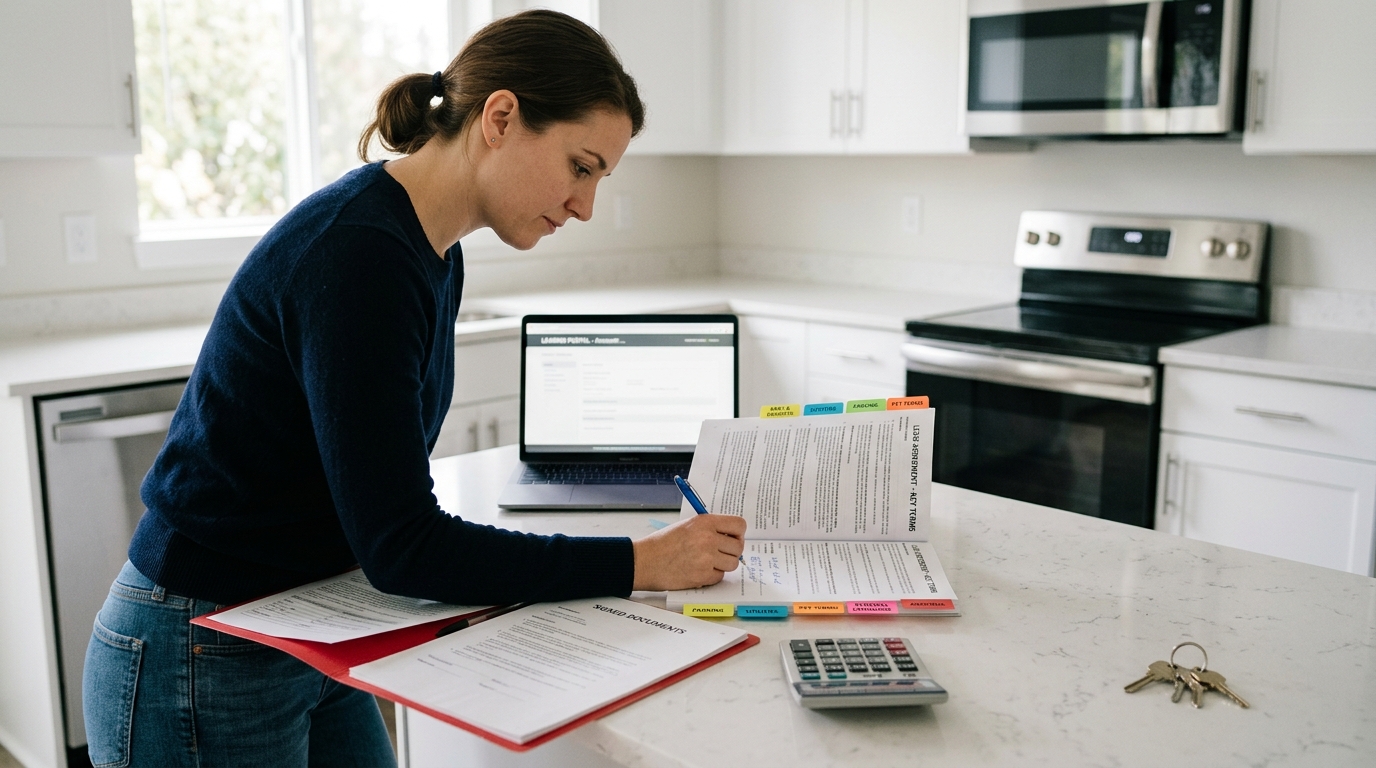
Once you have chosen a rental home, the next step is reading the leasing paperwork carefully. The contract sets out the rent, dates, required payments, utilities, occupancy, parking, pets, maintenance responsibilities, renewal terms, and other policies.
Skye at Warner Center is one community renters may consider while they explore modern apartment living near Warner Center.
This apartment lease checklist near Warner Center can help renters review rent, fees, utilities, parking, pets, renewal terms, and addenda before signing.
Quick Answer: What Should You Look for in an Apartment Lease?
Check the leaseholders’ names, unit number, start and end dates, monthly rent, payment due date, required fees, utilities, vehicle arrangements, pet terms, insurance requirements, occupant and guest rules, maintenance responsibilities, renewal language, notice requirements, early-termination terms, and every referenced addendum.
Important promises or changes should also appear in the rental contract or other signed documentation. Read the complete set of documents and ask about anything you do not understand.
1. Start With the Names, Apartment, and Dates
Begin with the basic details:
- Names of all leaseholders
- Property address and unit number
- Rental start and end dates
- Possession or move-in date
- Monthly rent
- Payment due date
- Accepted payment methods
If different term lengths are available, make sure the final contract reflects the option you selected and the price connected to it.
The property’s frequently asked questions currently state that short-term options, including three- and nine-month terms, may be offered for an additional fee. Availability and pricing may change.
At Skye at Warner Center, use the FAQ and leasing team as starting points, then make sure the final rental contract reflects the terms for the specific apartment.
2. Check Base Rent and Every Required Payment
Base rent may be only one part of your total housing expense. Look for recurring fees, separately billed utilities, vehicle-related costs, applicable pet expenses, storage, insurance requirements, late-payment fees, returned-payment charges, and other amounts listed in the main document or policy attachments.
For each payment, determine:
- Whether it is one-time or recurring
- When it is due
- Who receives it
- Whether it is refundable, when applicable
- Whether the amount can change during the rental period
If the final paperwork differs from a verbal or emailed quote, stop and resolve the difference. For broader budgeting help, use the guide to calculating the cost of moving into an LA apartment.
3. Check Utilities, Parking, Pets, and Insurance
These everyday policies may appear in the main contract or separate attachments. Read both.
| Lease Area | What to Clarify |
|---|---|
| Utilities | What is included, what the renter pays, how billing works, and whether accounts must be opened |
| Parking | Assigned spaces, availability, monthly costs, access, guest rules, and EV-charging terms |
| Pets | Approval, count or size limits, breed or species restrictions, deposits, monthly pet rent, and documentation |
| Insurance | Required coverage, liability limits, proof requirements, approved providers, and deadlines |
Utilities are not automatically included. A garage does not always mean a space is assigned, included, or free. A pet-friendly community may still have approval requirements and restrictions.
Make sure the terms that affect your household are clearly documented.
4. Check Occupants, Guests, and Community Policies
Find the section identifying authorized occupants and explaining guest or shared-space requirements. These provisions may cover:
- Guest limits or registration
- Smoking
- Packages
- Noise
- Common-area access
- Occupancy limits
- Community conduct
Make sure every intended occupant is identified correctly.
If the contract refers to a resident handbook, rules and regulations, or another policy document, obtain that document and read it. A referenced policy may become part of the terms even when it is separate from the main pages.
5. Understand Maintenance and Alteration Responsibilities
Look for instructions covering maintenance requests, emergency contacts, renter responsibilities, painting, wall mounting, fixture changes, and other alterations.
The practical question is: What must you do before changing anything in the home?
A small or temporary change is not necessarily allowed. Check whether approval must be requested and whether it needs to be documented.
California Department of Real Estate guidance recommends reading the entire contract and any documents it references. If an important maintenance or alteration provision is difficult to understand, ask how it applies before you commit.
6. Check Renewal, Notice, and Early-Termination Terms
Read what happens when the rental period ends. Look for:
- Renewal procedures
- Month-to-month language
- Required notice periods
- How and where notice must be delivered
- Early-termination provisions
- Assignment or subletting rules
- Any related payments or conditions
Do not assume every California rental contract uses the same notice period, renewal process, early-departure provision, or subletting policy.
Use the wording in your own documents. If you have legal questions about how a provision applies to your situation, seek qualified guidance rather than relying on a general article.
7. Read Every Addendum and Policy Document
The main contract may incorporate separate documents covering parking, pets, utilities, insurance, community rules, or other property-specific requirements.
Do not skip a document because it is attached separately. Check every:
- Referenced attachment
- Completed blank
- Checked box
- Initial line
- Signature section
- Policy that differs from what you expected
California DRE guidance notes that printed forms vary and that some provisions apply only when a box is checked, a blank is completed, or a section is initialed. These details can be just as important as the main paragraphs.
8. Make Sure Important Promises Are Documented
If a repair, concession, vehicle arrangement, included feature, or other material promise affects your decision, ask where it appears in the signed paperwork.
California renter guidance recommends ensuring that important promises are included and that renters receive any separate documents referenced by the contract.
Documentation makes the final terms easier to verify later. It also gives everyone an opportunity to correct missing or conflicting information before the paperwork is completed.
9. Save the Complete Signed Documents
After completion, keep these records together:
- Fully executed rental contract
- Every addendum and policy attachment
- Final leasing quote
- Payment receipts
- Important emails or other leasing correspondence
- Later amendments
- Condition reports and move-in records
Make sure your copy contains all signatures, completed blanks, and referenced attachments. Save a secure digital copy as well as any paper version you receive.
Once your records are complete, use the separate guide to prepare for the apartment move-in walkthrough.
Use an Apartment Lease Review Checklist
This table can help you examine your own paperwork. It is not a legal interpretation of its terms.
| Lease Section | What to Verify |
|---|---|
| Leaseholders | Correct names for everyone responsible under the contract |
| Apartment | Correct address and unit number |
| Term | Start date, end date, and possession date |
| Rent | Monthly amount, due date, payment method, and recipient |
| Other charges | One-time and recurring required payments |
| Utilities | Included services and renter-paid responsibilities |
| Parking | Space, availability, cost, access, and guest rules |
| Pets | Approval and applicable limits, deposits, and monthly charges |
| Insurance | Required coverage, limits, proof, and deadline |
| Occupants and guests | Who may live there and the applicable guest policies |
| Maintenance | Request process, emergency contacts, and renter responsibilities |
| Alterations | Which changes require advance approval |
| Renewal and notice | What happens when the term ends and how notice must be delivered |
| Early termination | Applicable conditions, requirements, and costs |
| Addenda | Every referenced document received and examined |
| Important promises | Material terms included in signed documentation |
| Final copy | Complete executed documents saved |
Clarify Remaining Questions
If something important is unclear, ask before you sign. Contact the leasing team and make sure the final documents reflect the apartment, price, rental period, services, policies, and other terms you expect.
Frequently Asked Questions About Apartment Leases
What Should You Look for in an Apartment Lease?
Check the names, unit number, dates, rent, required payments, utilities, parking, pets, insurance, occupants, guest policies, maintenance responsibilities, renewal terms, notice requirements, early termination, and every referenced attachment.
Should You Read Every Lease Addendum?
Yes. An addendum may contain additional requirements, payments, responsibilities, or disclosures that become part of the rental contract.
What Fees Should Be Listed?
Identify every recurring and one-time payment connected to the tenancy. Determine when it is due, whether it repeats, and whether it is refundable when applicable.
What Should the Lease Say About Utilities?
It should explain which services are included, which ones the renter must arrange or pay for, and how applicable billing works.
What Happens If You Need to End the Lease Early?
The answer depends on the contract and applicable law. Read the early-termination, notice, assignment, and subletting provisions rather than assuming every rental handles an early departure the same way.
Should Verbal Promises Be Included?
If a repair, concession, parking arrangement, feature, or other material promise affects your decision, ask for it to appear in the contract or other signed documentation.
Disclaimer
This article provides general renter education and is not legal advice. Rental terms, fees, policies, notice requirements, rental periods, and addenda can vary by apartment and contract. Read the complete lease and every referenced document, document important promises, and seek qualified guidance for legal questions about a specific provision.
External sources referenced:
- California Department of Real Estate — 2026 Landlord/Tenant Guide
- California Department of Real Estate — When You Have Decided to Rent
- Los Angeles County DCBA — Before You Rent
The post What to Look for in an Apartment Lease Before Signing appeared first on Skye at Warner Center Blog.
]]>The post Apartment Hunting Checklist: What to Verify Before You Apply appeared first on Skye at Warner Center Blog.
]]>
Apartment hunting gets harder when several listings start to look similar. Photos may be polished, floor-plan names can blur together, and the lowest advertised rent does not always reflect the full monthly cost.
This apartment hunting checklist can help renters near Warner Center compare the specific unit, total cost, parking, utilities, amenities, and lease terms before applying. Start with the Skye at Warner Center homepage when checking property information and contact details.
Quick Answer: What Should You Check Before Applying for an Apartment?
Start by checking the specific unit number, base rent, mandatory fees, security deposit, rental term, move-in date, utilities, vehicle charges, pet expenses, included features, and application requirements. During a tour, ask whether you are seeing the available home or a model, then look at the floor-plan flow, storage, furniture fit, laundry, noise, and community access.
Save the important terms in a written quote, then compare your final choices side by side before submitting documents or making a payment.
Step 1 — Set Your Apartment Must-Haves Before You Tour
Start with requirements that would actually change your decision.
- Budget: Set a maximum monthly total, not only a target base rent.
- Bedroom count: Decide whether a one- or two-bedroom layout fits the household and privacy needs you already know you have.
- Move-in timing: Decide which dates you can realistically accept before touring homes with different availability.
- Parking and transportation: Decide whether you need an assigned space, EV charging, transit access, or a particular commute pattern.
- Pets: Identify any pet-policy requirements that could affect eligibility, recurring charges, or your choice of home.
- Daily features: Separate essentials such as in-home laundry or storage from features that would simply be nice to have.
Skye at Warner Center showcases one- and two-bedroom floor-plan types. Use the live floor-plan page to review current pricing and availability, then ask the leasing team about the specific residence because dimensions and features can differ by unit.
Step 2 — Verify the Rental Listing Before Sharing Money or Documents
Before sending money, ID, pay stubs, or other sensitive information, make sure you are communicating with the actual property or management company. The Federal Trade Commission’s rental listing scam guidance warns that scammers may copy real listings, replace contact information, or advertise homes that are not available.
Search for the property independently and use the contact information on its official website. Check the address, available residence, quoted rent, and leasing contact before moving forward.
Step 3 — Calculate the Complete Apartment Cost
Two rental homes with similar advertised rent can have different all-in totals. Ask for a written breakdown of recurring and one-time charges.
| Cost | What to Verify |
|---|---|
| Monthly rent | Base rent for the specific unit and rental term |
| Mandatory fees | Which services or charges recur each month |
| Parking | Whether it is included, optional, assigned, or charged separately |
| Pets | Deposits, recurring pet rent, and applicable restrictions |
| Utilities and internet | What is included, billed separately, or opened in the renter’s name |
| Application and deposit | Amount, due date, and whether any payment is refundable |
Also account for renters insurance, storage, moving, and furnishing needs. For deeper budgeting, use the guide to plan the complete cost of moving into an LA apartment.
Step 4 — Check the Available Apartment You Are Considering
The model can look great, but it may not be the apartment you would actually get. Ask whether you are touring the available home. If not, find out what changes in the floor plan, level, windows, finishes, view, storage, outdoor space, appliances, and select-home features.
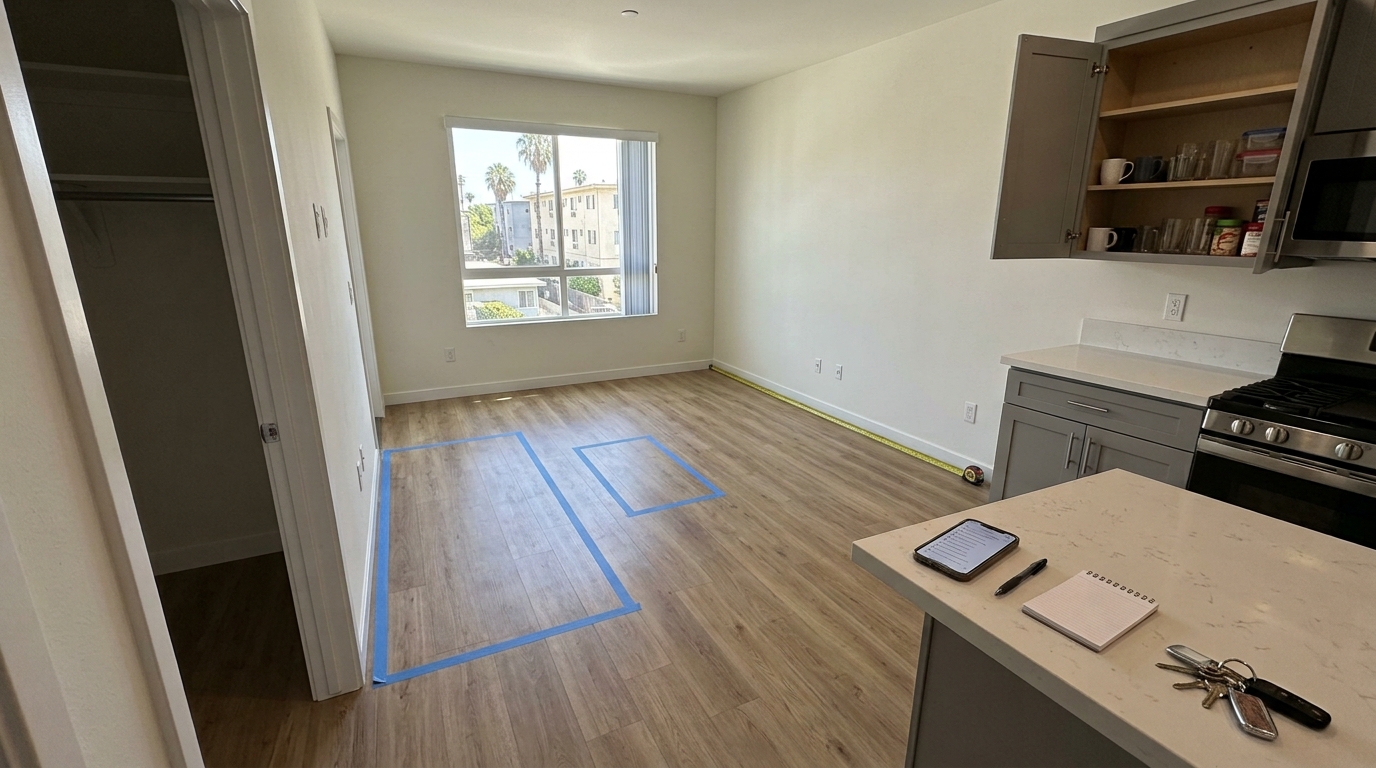
Measure the pieces that matter most, including your bed, sofa, desk, and dining table, and compare them with the usable wall space.
Skye’s inventory changes over time. You can preview the available virtual tours before a visit, then ask about the residence currently being offered.
Step 5 — Check the Practical Details During the Tour
Use the tour to see how the rental home and community would work in daily life, not just how they look in photos.
- Inside the rental home: Check storage, windows, outlets, appliance placement, HVAC controls, laundry, flooring, and any smart-home features listed for the residence.
- Furniture fit: Look at usable wall lengths, door swings, hallway width, and where larger pieces would realistically go.
- Vehicle access: Ask where residents enter, how the garage works, whether guest spaces are available, and what EV-charging rules or charges apply.
- Packages and storage: Find out how package lockers, available resident storage, or other shared services are accessed and whether additional fees apply.
- Shared amenities: Ask which spaces residents can use, their operating rules, and whether reservations or additional charges apply.
- Maintenance: Ask how regular and urgent requests are submitted and how residents receive updates.
Skye’s current amenities page lists in-home washers and dryers, smart-home technology, controlled-access parking, EV charging stations, secure automated package lockers, available resident storage rooms, a fitness center, and shared resident spaces. Amenities may vary by unit, so review Skye’s apartment and community amenities and ask which features come with the home you are considering.
Step 6 — Review Policies That Affect Your Routine
For pets, ask whether your animal is permitted, what deposits or monthly charges apply, and whether limits or restrictions exist. For vehicle needs, find out whether a space is included, what it costs, how guest access works, and whether EV charging is available.
For utilities, find out what is included, what must be placed in your name, and how shared charges are calculated. Also review the rental term, renewal process, notice requirements, and move-in date in the latest written offer.
Step 7 — Use an Apartment Comparison Scorecard
After several tours, record verified facts while they are fresh instead of relying on memory.
| Category | Apartment A | Apartment B | Apartment C |
|---|---|---|---|
| Total monthly cost | |||
| Upfront cost | |||
| Layout and furniture fit | |||
| Storage | |||
| Commute | |||
| Parking | |||
| Pet fit | |||
| Amenities | |||
| Lease terms | |||
| Move-in date | |||
| Overall fit |
Add brief notes or a simple 1–5 rating if useful, but keep the comparison simple and consistent.
Step 8 — Review Everything in Writing Before You Apply
Before submitting an application, compare the written quote with what you heard during the tour. Check the unit number, rent, mandatory fees, deposit, rental length, move-in date, vehicle charges, pet expenses, utilities, included features, concessions, application requirements, and required documents.
Ask what happens to an application, holding, or other payment if you withdraw, are not approved, or do not sign the agreement. The amount and refund policy should be clear before money changes hands.
Use Your Checklist at Skye at Warner Center
Skye at Warner Center is located at 20944 W. Vanowen St. in Canoga Park near Warner Center and showcases one- and two-bedroom floor-plan types. Once you have narrowed your preferred design, budget, vehicle, and amenity needs, contact the Skye leasing team about current availability, pricing, rental terms, fees, and move-in timing.
Frequently Asked Questions About Apartment Hunting
What Should I Look for When Apartment Hunting?
Check the full monthly total, location, floor plan, storage, vehicle needs, utilities, pet policies, amenities, rental terms, move-in date, and the specific residence being offered.
What Questions Should I Ask During an Apartment Tour?
Ask whether you are seeing the available home, what varies by unit, which utilities are included, how the garage works, how maintenance requests are handled, and which charges apply beyond rent.
Should I Apply for an Apartment Before Seeing It?
If possible, check the property, leasing contact, residence details, and latest terms before sending money or sensitive information. For remote searches, use the official website, virtual tours, and official leasing contact.
How Do I Compare Two Apartments With Similar Rent?
Compare the all-in monthly total, upfront expenses, floor-plan flow, furniture fit, commute, vehicle needs, storage, utilities, amenities, rental terms, and move-in date. A side-by-side scorecard makes the differences easier to see.
What Should I Check Before Paying an Apartment Application Fee?
Make sure the property and leasing contact are legitimate, check the residence and quoted terms, understand the application process, and ask which payments are refundable or nonrefundable. Save the written quote and payment terms.
Disclaimer
Rental pricing, fees, availability, qualification requirements, rental terms, pet policies, vehicle charges, amenities, and promotions can change. Ask the property about the specific residence and application details before paying or applying. This article provides general renter information and is not legal advice.
External source: FTC — Rental Listing Scams
The post Apartment Hunting Checklist: What to Verify Before You Apply appeared first on Skye at Warner Center Blog.
]]>The post How Much Money Do You Need to Move Into an Apartment in LA? appeared first on Skye at Warner Center Blog.
]]>
Monthly rent is only the starting point when calculating how much money to move into an apartment in LA. Before receiving the keys, you may need to cover the first rent payment, a security deposit, application costs, movers, utilities, insurance, furniture, parking, and pet expenses.
California’s current deposit rules have changed the older assumption that every renter needs several months of rent upfront. However, the final amount still depends on the property, lease, apartment size, moving method, and belongings you already own.
Your timing matters too. Review how quickly an LA apartment move can happen while building your savings plan.
Quick Answer: How Much Should You Save to Move Into an LA Apartment?
A practical starting target is approximately two months of rent plus moving and setup costs. This includes the first month’s rent and up to one month of rent for a standard security deposit, followed by application costs, insurance, utilities, movers, furniture, parking, and pet expenses.
Many renters may need roughly 2.5 to 4 times the monthly rent available. This is a planning range—not a property quote, legal minimum, or guarantee that every renter will pay the same amount.
Start With This LA Apartment Move-In Formula
Use this formula to build a personal estimate:
First month’s rent + security deposit + application and lease costs + pet, parking, and storage costs + utilities and insurance + moving costs + furniture and essentials + savings buffer = recommended move-in savings
Label each cost before adding it:
| Cost Label | Meaning |
|---|---|
| Refundable | May be returned when the lease ends, subject to lawful deductions and written terms. |
| Nonrefundable | Usually not returned after the service or screening is completed |
| Applied toward rent | Becomes part of a rent payment rather than a separate expense. |
| Recurring | Continues monthly after move-in |
| Variable | Depends on the property, provider, renter, or moving method |
Request a written itemization from the property so you know what is due during application, lease signing, and key pickup.
Plan for First Month’s Rent and the Security Deposit
The first rent payment and security deposit are usually the two largest upfront amounts.
First Month’s Rent
A property may request the full first month at lease signing or before move-in. A midmonth move may involve prorated rent, but the calculation and due date depend on the lease.
Ask whether the amount is based on the advertised base rent or the total monthly leasing price, which may include mandatory services. A concession may reduce the total cost of the lease without reducing the amount due before receiving the keys.
The first rent payment is not refundable. It pays for the rental period covered by the lease.
Security Deposit
California Civil Code Section 1950.5 generally limits residential security to one month’s rent in addition to the first month’s payment. A narrow exception may allow qualifying small landlords with limited properties and units to collect up to two months of rent. A security deposit is generally refundable after lawful deductions rather than permanently spent.
Do not assume you will owe exactly one month. Request the property’s written deposit amount and ask how pet-related security affects the total.
California law also treats several payments imposed at the beginning of a tenancy as “security,” regardless of the label used. This is one reason renters should not assume every lease separately requires first month’s rent, last month’s rent, and another full deposit.
For tenancies beginning on or after July 1, 2025, landlords collecting a security deposit must photograph the unit immediately before or at the start of the tenancy. Renters should also take dated photos and retain their move-in condition report.
Add Application, Holding, and Lease-Related Costs
Smaller charges can still affect the amount needed before approval.
| Possible Cost | What to Confirm |
|---|---|
| Applicant—screening fee | Amount per adult, what the fee covers, and whether a receipt is provided |
| Holding payment | Whether it reserves the apartment and is later applied to rent or the deposit |
| Administrative charge | Purpose, due date, refundability, and how it appears in the lease |
| Short-term lease premium | Additional monthly or upfront cost for choosing a shorter term |
California adjusts the maximum applicant-screening fee each year. For budgeting, you may use approximately $0–$70 per adult applicant as a rounded planning allowance, but do not treat that range as the active legal maximum. Confirm the current permitted charge and property policy before applying.
Holding payments require special attention. Ask what happens if the application is denied, you withdraw, or the lease is not signed by the stated deadline.
Skye at Warner Center currently advertises three- and nine-month leases for an additional charge, showing how lease length can affect the monthly and upfront calculation.
Include Pets, Parking, Utilities, and Renters Insurance
These property-specific expenses are often missing from a basic first-month-plus-deposit estimate.
- Pet costs: Ask about the pet deposit, monthly pet rent, screening, documentation, limits, and restrictions. Skye currently lists a $500 deposit and $50 monthly pet rent per pet, but these figures are property-specific and should not be treated as an LA standard.
- Parking and storage: Confirm whether parking is included, whether covered parking costs extra, and whether storage rooms or EV charging involve separate fees.
- Electricity and gas: Contact the providers to determine whether an account deposit or connection charge applies.
- Water, trash, and service packages: Ask whether these are individually metered, allocated, included, or billed through a mandatory monthly package.
- Internet setup: Compare provider plans, installation charges, equipment costs, and activation timing.
- Renters insurance: Check whether the lease requires coverage and whether the property has minimum liability limits. Premiums vary by coverage, location, deductible, and applicant details.
Skye currently confirms controlled-access parking, internet options from AT&T and Spectrum, common-area Wi-Fi, EV charging, and available resident storage rooms. Costs and availability should be confirmed directly.
Budget for Movers, Furniture, and Household Essentials
Two renters paying the same rent may need very different move-in savings because their moving and furnishing needs differ.
- DIY move: Budget for a truck or van, fuel, mileage, equipment, packing supplies, parking, and possible elevator reservations.
- Hybrid move: You handle packing while hired labor assists with loading, stairs, heavy furniture, or unloading.
- Full-service movers: Professional movers may handle loading, transportation, and unloading, with optional packing or assembly services.
- Furniture: List the bed, mattress, seating, desk, dining furniture, storage, lamps, and window coverings you still need.
- Kitchen and bathroom basics: Include cookware, dishes, cleaning products, shower items, trash cans, and other small necessities.
- Delivery and assembly: Furniture prices may not include delivery, setup, or removal of packaging.
Moving.com’s 2026 calculator estimates approximately $560–$1,098 for a local studio or one-bedroom move and $1,077–$1,932 for a two- or three-bedroom move. Distance, access, stairs, timing, packing, and Los Angeles labor conditions can change the final quote.
Skye currently lists furnished apartments as available. Furnished housing may reduce setup purchases, but renters should compare the total lease cost and confirm the exact furniture package.
Example LA Apartment Move-In Budgets
These examples are illustrations—not listings, quotes, legal minimums, or guaranteed totals.
Current rent sources also report different Los Angeles averages. In July 2026, Zillow reported approximately $2,095 for one-bedroom apartments and $2,865 for two-bedrooms, while RentCafe reported approximately $2,545 and $3,370. RentCafe reported approximately $1,964 for studios.
Example 1: Studio With a Lower-Cost Move
| Expense | Illustrative Amount |
|---|---|
| Monthly rent | $1,800 |
| Security deposit | Up to $1,800 |
| Application allowance | $0–$70 |
| Insurance setup | $15–$25 |
| DIY or basic move | $150–$600 |
| Furniture and essentials | $400–$1,000 |
| Illustrative total | $4,165–$5,295 |
This excludes parking, pets, utility deposits, and an emergency reserve.
Example 2: One Bedroom With Professional Movers
| Expense | Illustrative Amount |
|---|---|
| Monthly rent | $2,300 |
| Security deposit | Up to $2,300 |
| Application allowance | $0–$70 |
| Insurance setup | $15–$25 |
| Movers | $560–$1,100 |
| Furniture and essentials | $700–$1,800 |
| Illustrative total | $5,875–$7,595 |
Example 3: Two-Bedroom Household With More Furniture
| Expense | Illustrative Amount |
|---|---|
| Monthly rent | $3,100 |
| Security deposit | Up to $3,100 |
| Applications for two adults | $0–$140 |
| Insurance setup | $15–$30 |
| Movers | $1,075–$1,950 |
| Furniture and essentials | $1,000–$2,500 |
| Illustrative total | $8,290–$10,820 |
How Specials and Timing Can Change the Cost
A concession may lower the full lease cost without reducing the amount required on move-in day.
Gross rent is the stated rent before discounts. Net effective rent spreads a concession, such as one free month, across the full lease term.
Before relying on a special, ask:
- Which apartments qualify?
- When is the free-rent period applied?
- Is full rent due at move-in?
- Is the discount spread across monthly payments?
- Is there a signing deadline?
- Must the concession be repaid after early termination?
- Is the deposit based on gross rent?
Availability and specials may change throughout the year. Review the best time to rent an apartment in LA, but remember that no season guarantees a lower price.
Build a Buffer Before You Sign
Avoid spending every available dollar on deposits, movers, and furniture.
- Groceries and transportation: Keep enough cash for food, fuel, transit, and daily travel immediately after moving.
- Utility bills: The first bill may arrive sooner or be higher than expected because of activation or partial billing periods.
- Overlapping rent: Your old and new leases may overlap, especially when move-in and move-out dates do not align.
- Unexpected apartment needs: You may discover that you need shelving, curtains, lighting, tools, or other basics after moving.
- Moving-day changes: Delays, added labor, parking issues, or additional trips can increase the final cost.
- Emergency reserve: Maintain a separate cushion based on your income stability and personal expenses rather than treating the exact move-in total as your entire savings goal.
Estimating Move-In Costs at Skye at Warner Center
Once you have a general savings target, replace the sample numbers with details from the apartment you are considering. Start by reviewing the current one- and two-bedroom floor plans, then ask the leasing team for a written breakdown of the base rent, total monthly leasing price, security deposit, and other amounts due before move-in.
Your apartment preferences can also change the final budget. Furnished options may reduce how much you spend on furniture, while parking, storage, pet charges, or a shorter lease may add to your upfront or monthly costs. Review the in-home and community amenities alongside the frequently asked questions about Skye to identify which costs apply to your situation.
Renters who are still comparing locations can read about the pros and cons of living in Warner Center and explore other Warner Center rental housing options before choosing a unit type.
When exploring a newer apartment community in the West Valley, bring your budget worksheet and request a property-specific move-in estimate. You can confirm the available apartment, applicable charges, and current leasing terms when you schedule an apartment tour.
Frequently Asked Questions About LA Apartment Move-In Costs
How Much Money Do You Need to Move Into an Apartment in LA?
A useful starting target is approximately two months of rent plus application costs, movers, utilities, insurance, furniture, and a separate savings buffer. Depending on setup needs, many renters may need roughly 2.5 to 4 times the monthly rent.
How Much Is a Security Deposit in California?
California generally limits residential security to one month’s rent in addition to the first month’s payment. A narrow exception may permit qualifying small landlords to collect up to two months. Individual circumstances and written lease terms may vary.
Do You Need First and Last Month’s Rent in California?
Do not assume every lease requires the traditional first-and-last-month model. Request a written itemization of the first rent payment, security deposit, holding amount, and all other charges before signing.
How Much Do Movers Cost in Los Angeles?
Moving.com’s 2026 calculator estimates roughly $560–$1,098 for a local studio or one-bedroom move and $1,077–$1,932 for a two- or three-bedroom move. Access, distance, stairs, packing, and timing can raise the cost.
Do You Need Renters Insurance in Los Angeles?
The requirement depends on the lease. Many professionally managed communities require renters insurance with stated coverage limits. Premiums vary by policy, deductible, location, and renter details.
How Much Should You Save Beyond the Move-In Total?
Keep a separate cushion for utilities, groceries, transportation, overlapping rent, unexpected furniture, and moving-day changes. The appropriate amount depends on your income, obligations, and financial circumstances.
The post How Much Money Do You Need to Move Into an Apartment in LA? appeared first on Skye at Warner Center Blog.
]]>The post How to Choose the Right Apartment for Your Lifestyle appeared first on Skye at Warner Center Blog.
]]>
Choosing an apartment is not only about rent, photos, or a nice kitchen.
The right apartment should fit your lifestyle, budget, commute, work setup, storage needs, and daily habits. It should support the way you live now and where you want to go next.
Finding an apartment can feel overwhelming when there are many potential apartments to compare. One listing may have a better price. Another may have a better location. Another may offer amenities that look great online.
The perfect apartment is not the same for everyone.
Whether you’re moving for work, school, a fresh start, or a better daily routine, the apartment should reflect your lifestyle. If you are comparing rentals in the Warner Center area, modern apartment living near Warner Center can give you a helpful starting point for what a practical, well-designed home can look like.
Quick Answer: How Do You Choose the Right Apartment?
To choose the right apartment, start by evaluating your lifestyle, budget, commute, floor plan needs, lease terms, amenities, and surrounding neighborhood. The right fit should support your daily routine, give you enough living space, and make everyday tasks easier. Before signing a lease, compare the apartment layout, utility costs, parking, pet fees, public transportation, noise levels, and property management support so you can make an informed decision.
1. Start With Your Lifestyle and Daily Routine
The first step in choosing an apartment is understanding how you live every day.
A renter who works long hours may need a quiet place to rest. Someone working from home may need a home office or a dedicated desk area. Someone who loves hosting friends may need more living space and an open layout.
Your daily routine should guide the search.
Think about how you spend your time from morning to night. The goal is to find a home that supports your daily needs, not just a unit that looks nice in photos.
Questions to Ask About Your Lifestyle
Before apartment hunting, ask yourself:
- Do you work from home?
- Do you need a separate bedroom or home office?
- Do you cook often?
- Do you need a large closet?
- Do you love hosting friends?
- Do you need quiet space?
- Do you have pets?
- Do you rely on public transportation?
- Do you want common areas where you can relax or work?
- Do you want to be close to grocery stores, restaurants, or shopping?
These questions help you understand what matters most.
For example, if you cook often, the kitchen layout may matter more than a large bedroom. If you take frequent calls at home, a quieter layout may matter more than being close to the pool or lounge.
Choosing an apartment becomes easier when you know what you actually need.
2. Evaluate the Apartment Layout Carefully
A bigger apartment isn’t always better if the layout does not work.
The layout of your apartment affects furniture placement, storage, privacy, and how comfortable the space feels. A smart apartment layout can make a smaller home feel open and useful. A poor layout can make a larger home feel awkward.
This is why renters should evaluate the layout carefully.
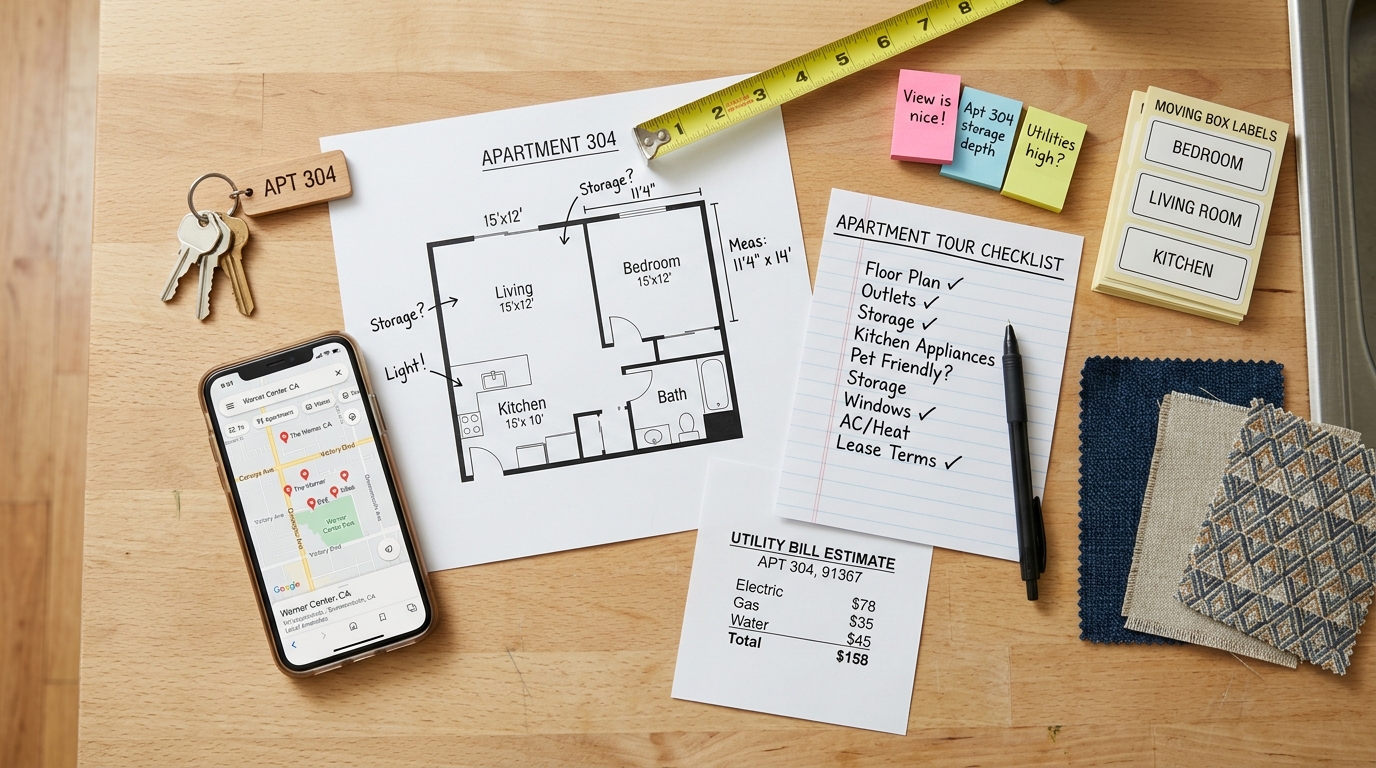
Look beyond the square footage number. Think about how the space will feel once your bed, sofa, desk, dining setup, and storage items are inside.
What to Look for in a Floor Plan
When reviewing a floor plan, check:
- Bedroom placement: Is it private enough for sleep and rest?
- Living room size: Can it fit your sofa, table, and entertainment setup?
- Kitchen flow: Is there enough room to cook and move comfortably?
- Closet space: Will your clothes, shoes, and daily items fit?
- Bathroom access: Is it convenient for you and guests?
- Natural light: Does the apartment feel bright enough?
- Desk space: Is there room for a home office or work corner?
- Furniture placement: Can your current furniture fit?
- Storage: Is there enough room for cleaning supplies, luggage, or hobby items?
If you are comparing one-bedroom and two-bedroom options, think about how each layout that fits your lifestyle may change your daily routine. A two-bedroom can be useful if you need a guest room, roommate setup, or separate office.
To compare layouts more clearly, review the available floor plan options and picture how your furniture and routines would fit inside each space.
3. Set a Realistic Budget Beyond Monthly Rent
Affordability is one of the biggest factors to consider when choosing an apartment.
Rent matters, but it is only one part of the full monthly cost. A lower rent may not be the best value if the apartment has high extra costs, a difficult commute, or limited features that add stress to your routine.
The goal is to find the perfect fit for both lifestyle and budget.
Costs to Review Before Signing a Lease
Before signing a lease, review the overall cost of living, including:
- Monthly rent
- Utility costs
- Parking fees
- Pet fees
- Application fees
- Security deposit
- Renters insurance
- Internet
- Moving costs
- Potential rent increases
- Storage costs, if needed
You’ll also want to ask which costs are included and which are separate.
For example, some communities may include certain services, while others bill them separately. Parking, pets, trash, water, and internet may vary by property.
A good apartment budget should leave room for normal life. Rent should not take over every part of your paycheck. The right home should feel comfortable financially, not stressful every month.
4. Review the Lease Terms Before You Commit
Lease terms can affect your rental experience long after move-in.
A lease explains what is allowed, what is restricted, and what happens if your plans change. It should cover rent due dates, maintenance requests, guest rules, parking rules, pet policies, renewal terms, and sublet rules.
A renter should ask questions before signing, not after moving in.
Questions to Ask About the Lease
Before you commit, ask the landlord or property team:
- How long is the lease?
- Are there renewal options?
- Are rent increases possible at renewal?
- Are overnight guests allowed?
- Are pets allowed?
- Are there pet fees?
- Can you sublet?
- How are maintenance issues handled?
- Who handles repairs?
- What happens if you need to move early?
- What is included in rent?
- What is the process for submitting service requests?
These questions can help you avoid confusion later.
A clear lease can make the rental experience smoother because everyone understands the expectations. It also helps you compare potential apartments more fairly.
5. Decide Which Amenities Actually Matter
Amenities are important, but not every amenity matters to every renter.
The best amenity is the one you will actually use. A fitness center can save time if you exercise often. On-site parking can make a huge difference if you drive daily. Package lockers may matter if you order online often.
Amenities like outdoor lounges, coworking spaces, and well-maintained common areas can also improve your living experience.
Helpful Amenities to Consider
When comparing apartment communities, decide what amenities are important to you.
Helpful features may include:
- Fitness center
- Pool or outdoor lounge
- Coworking space
- Package lockers
- On-site parking
- Pet-friendly areas
- Laundry access
- Controlled access
- Common areas
- Outdoor seating
- Maintenance support
- Smart-home features
Well-lit common areas can also support daily comfort, especially when you come home in the evening or use shared spaces after work.
The goal is not to choose the building with the longest amenity list. The goal is to choose the apartment community that makes everyday life easier.
You can review amenities that support your lifestyle to compare which features may matter most for your routine.
6. Look Closely at the Surrounding Neighborhood
The surrounding neighborhood can matter just as much as the apartment itself.
A beautiful unit can become frustrating if the location does not match your life. An apartment in the wrong area for your needs can make errands, commuting, and daily routines harder.
Think about what you need nearby.
For many renters, amenities like grocery stores, restaurants, coffee shops, shopping, parks, and public transportation matter just as much as the building features.
Things to Consider Around the Apartment Community
When reviewing the neighborhood, look at:
- Nearby grocery stores
- Restaurants and coffee shops
- Public transportation
- Commute routes
- Parks or outdoor space
- Shopping
- On-site parking or street parking
- Noise levels
- Walkability
- Access to work or school
- Transportation options for car-light days
Warner Center can appeal to renters who want access to shopping, dining, transit, and everyday convenience in the San Fernando Valley. It also gives renters access to nearby Woodland Hills, Canoga Park, and larger Valley routes.
If you are still comparing nearby areas, this guide can help you compare Warner Center and Woodland Hills for renters.
Transportation is also important. Renters who do not want to drive every day should review local bus service, nearby stops, and connections. Warner Center has access to local transit options, including shuttle connections that can link riders to broader Metro service.
You can explore transportation options in Warner Center to better understand how local mobility may fit your routine.
7. Tour the Apartment With a Clear Checklist
Touring an apartment is one of the best ways to see if it feels like home.
Photos can help, but a tour shows the real light, layout, sound, storage, and condition. It can also help you notice details that are easy to miss online.
Bring a checklist so you do not forget important questions.
Expert Tips for Touring an Apartment
When touring an apartment, check:
- Closet and storage space
- Cabinet and appliance condition
- Natural light
- Window placement
- Noise levels
- Common areas
- Parking access
- Package delivery setup
- Laundry access
- Maintenance process
- Utility responsibilities
- Pet rules and pet fees
- Lease terms
- What is included in rent
You’ll find that small details can make all the difference.
For example, a closet may look fine when empty but feel too small once you move in. A street may seem quiet in the afternoon but louder at night. A parking space may be available but cost extra.
The best tour helps you make an informed decision before you apply.
To prepare for a stronger tour, review what to look for when renting near Warner Center before visiting potential apartments.
8. Choose a Place That Supports Your Next Chapter
Finding the right apartment is about more than checking boxes.
The goal is to find a home that supports your daily schedule, budget, work needs, and comfort. A new apartment should help your life feel easier, not more stressful.
The apartment that truly fits your lifestyle should align with how you live now and where you are going next.
Maybe you need a quiet space for working from home. Maybe you want a larger kitchen for cooking. Maybe you want transportation options, on-site parking, or common areas that help you feel like you’re part of a community.
Skye at Warner Center offers a living experience that can work for renters who want modern apartment living near shopping, dining, transit, and Warner Center conveniences.
To better picture the local lifestyle, you can see what living in Warner Center feels like.
When you are ready to ask questions, compare availability, or schedule a visit, connect with the leasing team for current details.
Frequently Asked Questions About Choosing the Right Apartment
What are the most important factors to consider when choosing an apartment?
The key factors include budget, location, apartment layout, lease terms, amenities, commute, parking, building access features, maintenance support, and the surrounding neighborhood. These details help you choose a place that supports your daily routine and long-term comfort.
How do I know if an apartment fits my lifestyle?
An apartment fits your lifestyle if it supports your daily routine, work needs, storage needs, commute, budget, and comfort. Consider whether you need a home office, larger closet, quiet space, on-site parking, or amenities like a fitness center.
What should I ask before signing a lease?
Ask about rent, lease terms, utility costs, pet fees, maintenance issues, parking, guest rules, renewal options, rent increases, and whether subletting is allowed. It is also smart to ask how service requests are handled.
Is it better to choose an apartment based on location or amenities?
Both matter. Location affects commute, errands, public transportation, and cost of living, while amenities can improve daily comfort. The best choice depends on which features make the biggest difference in your routine.
What should I check when touring an apartment?
Check the layout, closet space, natural light, appliance condition, noise levels, common areas, parking, building condition, and maintenance process. Also ask questions about lease terms before applying.
How can I find the perfect apartment near Warner Center?
Start by setting your budget, choosing your preferred layout, reviewing commute options, comparing amenities, and touring potential apartments. The goal is to find the perfect place that feels practical, comfortable, and aligned with your lifestyle.
Source / Accuracy Note
This guide was created to help renters choose the right apartment using renter-focused planning, lifestyle considerations, property details, and Warner Center neighborhood context. Rental prices, availability, amenities, lease terms, fees, transportation routes, parking rules, and local conditions can change, so renters should verify current details before making a decision.
The post How to Choose the Right Apartment for Your Lifestyle appeared first on Skye at Warner Center Blog.
]]>The post Move-In Checklist for Los Angeles Renters appeared first on Skye at Warner Center Blog.
]]>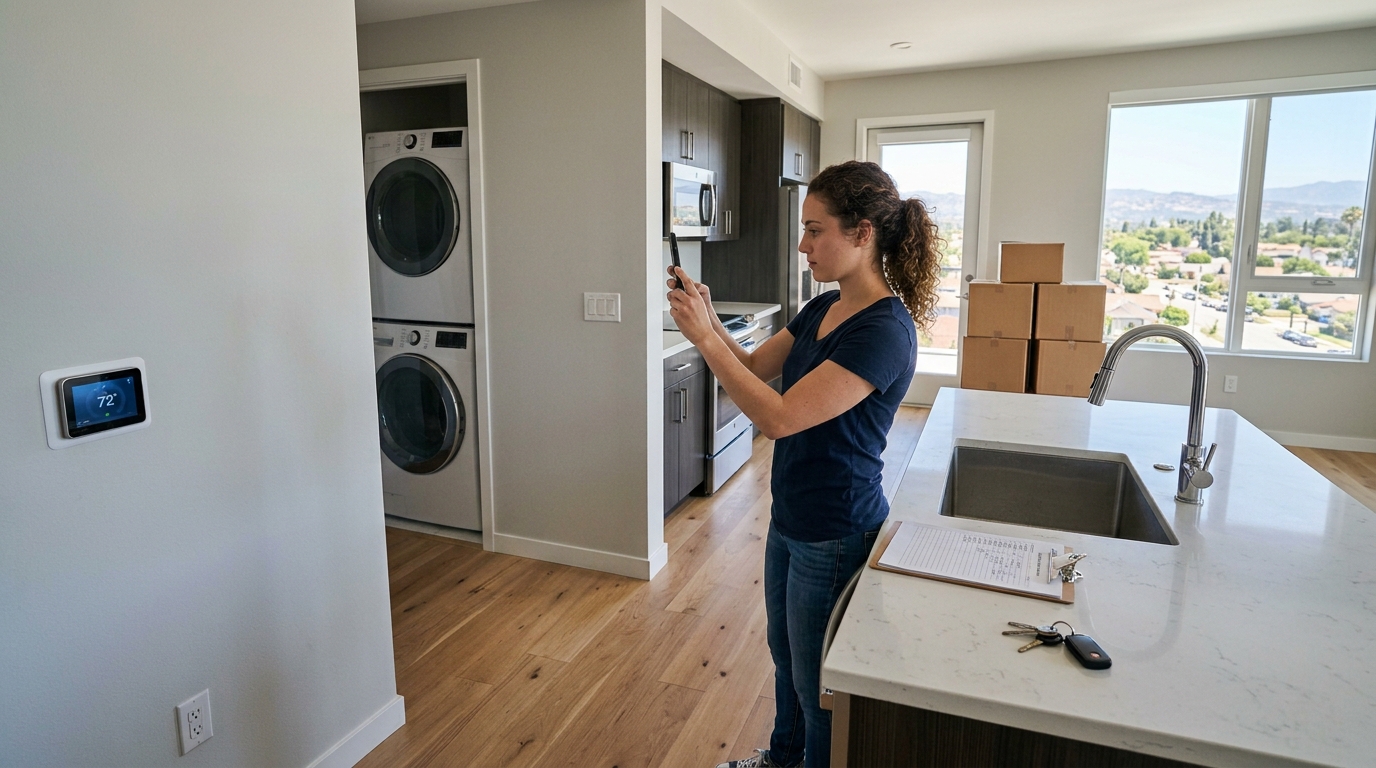
Move-in day should begin with an inspection, not with boxes covering the floors and walls. An empty apartment is easier to photograph, measure, and check for existing damage, missing items, or access problems.
This move-in checklist for Los Angeles renters covers key pickup, the walkthrough, smart-home systems, utilities, moving logistics, and first-week tasks. It is general renter education, not legal advice.
Quick Answer: What Should Be on an LA Apartment Move-In Checklist?
Before moving furniture inside, confirm the exact apartment and photograph every room. Complete the condition report and, with permission, test the doors, windows, plumbing, appliances, smoke and carbon monoxide alarms, heating and cooling, internet connections, laundry equipment, and access systems.
Then confirm parking, package delivery, utilities, insurance, keys, access codes, moving rules, and the resident portal. Keep unresolved concerns and tenancy records in writing.
Complete These Steps Before You Receive the Keys
- Confirm the exact apartment: Verify the apartment number, floor plan, lease start date, move-in date, deposit, parking assignment, pet terms, and any furnishings included.
- Ask about moving procedures: Confirm loading areas, elevator reservations, moving hours, truck access, protective pads, weekend restrictions, and the move-in contact person.
- Measure the route into the home: Check doorways, hallways, elevators, stair turns, and the walls where the bed, sofa, desk, and dining furniture will go.
Review the available floor plans and approximate dimensions before moving large furniture, but confirm measurements inside the selected residence because the public page does not currently provide complete details for every layout.
Review how quickly you can move into an LA apartment when coordinating movers and utility appointments.
When your moving date remains flexible, compare the best time to rent in LA.
You can also review the cheapest months to move in Los Angeles, while remembering that no season guarantees a lower price or easier move.
Document the Apartment Before Moving Anything Inside
Create one cloud folder for the tenancy, then use the same process in every room:
- Take wide photographs first. Photograph each room from its doorway and include the walls, ceiling, flooring, windows, and major fixtures.
- Move around the room in order. Working clockwise makes it easier to notice missed areas and connect close-ups with the wider room photographs.
- Add close-ups of existing concerns. Record scratches, chips, stains, damaged screens, loose fixtures, missing items, appliance concerns, and other visible conditions.
- Label the files clearly. Use names such as “kitchen-counter-scratch-August-2026” or “bedroom-window-mark-August-2026.”
- Complete the written condition report. Record the same issues listed in the photographs, along with the keys, remotes, parking credentials, and furnishings received.
- Send the record through a written channel. Email or upload the report, request confirmation, and save the sent message and any response.
For tenancies beginning on or after July 1, 2025, California Civil Code Section 1950.5 requires the landlord to photograph the unit immediately before or at the beginning of the tenancy. A renter should still keep a separate dated record because landlord and renter documentation serve different practical purposes.
Photographs do not guarantee a future outcome, but they create a useful condition baseline.
Inspect the Apartment Room by Room
Ask before operating appliances, testing alarms, opening secured areas, or using unfamiliar equipment.
| Area | What to Inspect or Test |
|---|---|
| Entry | Front-door lock, keyless entry, keys, fobs, intercom, and closing alignment |
| Windows and doors | Locks, screens, tracks, blinds, closet doors, visible gaps, and existing damage |
| Kitchen | Water pressure, drainage, visible leaks, appliances, cabinets, counters, outlets, lighting, and ventilation |
| Bathroom | Water pressure, hot water, toilet, drainage, caulking, ventilation, storage, outlets, flooring, and visible staining |
| Living areas | Walls, ceilings, floors, outlets, lights, vents, windows, blinds, natural light, and noise |
| Bedrooms | Bed fit, closets, doors, outlets, window direction, vents, flooring, and desk space |
| Laundry | Washer and dryer controls, door clearance, lint trap, visible hoses, and repair procedures |
| Safety devices | Smoke and carbon monoxide alarms, sprinklers where installed, emergency information, and locks |
| Outdoor and storage areas | Doors, locks, railings, drainage, lighting, flooring, storage, and included items |
Do not diagnose moisture, electrical, plumbing, or building-code concerns yourself. Photograph what you can see, report it clearly, and ask how management will evaluate and address it.
Test Smart-Home and Modern Apartment Features
- Keyless entry and access controls: Confirm the apartment lock, property entrance, elevator access, parking gate, visitor-entry system, backup-key process, and lost-fob procedure.
- Digital thermostat: Test the display and controls, ask how heating and cooling modes work, and confirm who handles filters and maintenance.
- Internet connections: Confirm providers, the in-wall panel, router location, equipment, activation time, and whether common-area Wi-Fi is separate.
- In-home laundry: Confirm the washer and dryer operate, locate the lint trap, and ask how repair requests are submitted.
- Package lockers: Register the account, test notifications, and ask about pickup deadlines and oversized deliveries.
- Parking and EV charging: Confirm the assigned space, gate credentials, registration, pricing, and availability.
- Resident portal: Make sure you can access rent payments, maintenance requests, notices, and community information.
Skye at Warner Center currently lists keyless unit access, digital thermostats, centrally wired in-wall Wi-Fi panels, broadband options from AT&T and Spectrum, in-home washers and dryers, automated package lockers, controlled parking, and EV charging. Amenities may vary by apartment, so renters should verify the exact home and current procedures.
Review the in-home and community amenities and note which systems require registration, fees, or credentials.
Confirm Utilities, Parking, Access, and Moving Logistics
Confirm who handles each service:
- Electricity
- Gas, when applicable
- Water and sewer
- Trash
- Internet and cable
- Required service packages
- Renters insurance
Inventory every access item:
- Apartment keys
- Mailbox key
- Entry fob
- Parking remote
- Storage key
- Amenity access
- Package-locker account
- Resident-portal login
Review moving-day logistics:
- Assigned parking space
- Guest parking
- Vehicle registration
- EV-charging enrollment
- Moving-truck clearance
- Loading zone
- Elevator reservation
- Street-cleaning signs
- Quiet hours
- Weekend or holiday restrictions
Utility billing differs by property, so do not assume every renter opens the same accounts.
Use the frequently asked questions about the community to confirm property-specific procedures. Skye’s current FAQ identifies one- and two-bedroom apartments, controlled parking, internet options, in-home laundry, smart-home features, furnished availability, short-term lease options, and variable move-in costs.
Finish These Tasks During Your First Week
- Submit unresolved concerns: Use the official maintenance system and include photographs when they help explain the issue.
- Save maintenance records: Keep the request number, date, response, appointment, and completion confirmation.
- Confirm access: Test the mailbox, package notifications, parking credentials, amenity entry, and resident portal.
- Register household details: Complete any required vehicle, pet, occupant, emergency-contact, or renters-insurance records.
- Organize tenancy documents: Store the lease, amendments, condition report, photographs, receipts, and management correspondence together.
- Update your address: Arrange mail forwarding and update important accounts.
Do not make electrical, plumbing, appliance, or structural repairs yourself unless the lease and property manager clearly authorize a minor task.
Renters still learning the area can review the pros and cons of living near Warner Center after the immediate move-in tasks are complete.
Keep Your Records to Help Protect the Security Deposit
Keep these documents throughout the tenancy:
- Move-in photographs
- Signed condition report
- Maintenance requests
- Repair confirmations
- Lease amendments
- Payment records
- Written communication about damage
- Move-out notice
- Forwarding-address information
- Move-out photographs
California law generally limits security to one month’s rent in addition to the first month’s rent. A limited exception may allow qualifying small landlords who meet specific ownership limits to request up to two months’ rent. The law also states that security cannot be used for preexisting conditions or ordinary wear and tear.
Near the end of a tenancy, California renters generally have the option to request an initial inspection under the procedures in Civil Code Section 1950.5. Its purpose is to identify certain proposed deductions that may be addressed before the tenant returns possession.
After the tenant vacates, the law generally requires the remaining security and an itemized statement within 21 calendar days. Current law also requires specified move-out and post-work photographs when deductions are taken for covered repairs or cleaning.
Rules can change, so consult current official guidance or a qualified professional when legal questions arise.
Start Your Move-In Planning at Skye at Warner Center
Renters considering a newer apartment community in the West Valley can use this checklist to compare Skye’s one- and two-bedroom apartments, smart-home features, in-home laundry, parking, package system, and internet options. Skye is located at 20944 W. Vanowen Street in Canoga Park, near Warner Center, and features and availability vary by residence.
Bring your measurements and questions when you schedule a tour, then confirm the exact apartment, costs, access procedures, and lease terms in writing.
Frequently Asked Questions About Moving Into an LA Apartments
What Should Be on a Move-In Checklist for Los Angeles Renters?
The checklist should cover empty-unit photographs, a written condition report, room-by-room inspection, appliances, plumbing, safety devices, smart-home systems, utilities, parking, renters insurance, keys, access codes, package registration, and written reporting of existing concerns.
When Should I Complete the Move-In Walkthrough?
Complete it after receiving lawful access but before boxes and furniture cover the floors, walls, fixtures, and appliances. Ask management when the official condition report and key handoff should occur.
How Should I Document Existing Damage?
Take wide and close-up dated photographs, list the condition on the written report, send it through an approved written channel, request confirmation, and save the full record.
Do California Landlords Have to Take Move-In Photos?
For tenancies beginning on or after July 1, 2025, California law requires the landlord to photograph the unit immediately before or at the start of the tenancy. Renters should still keep their own photographs and written condition records.
How Much Can a California Security Deposit Be?
California generally limits residential security to one month’s rent in addition to the first month. A limited exception applies to qualifying small landlords who meet specified ownership requirements. Individual circumstances should be verified.
Do California Landlords Have to Provide a Move-In Checklist?
California’s statewide security-deposit law establishes condition and photograph requirements but does not, in the source reviewed for this article, clearly require every landlord to use one standard move-in checklist form. Renters should request a condition report and create their own written and visual record.
The post Move-In Checklist for Los Angeles Renters appeared first on Skye at Warner Center Blog.
]]>The post Is Warner Center a Good Place to Live? A Renter’s Guide to Woodland Hills appeared first on Skye at Warner Center Blog.
]]>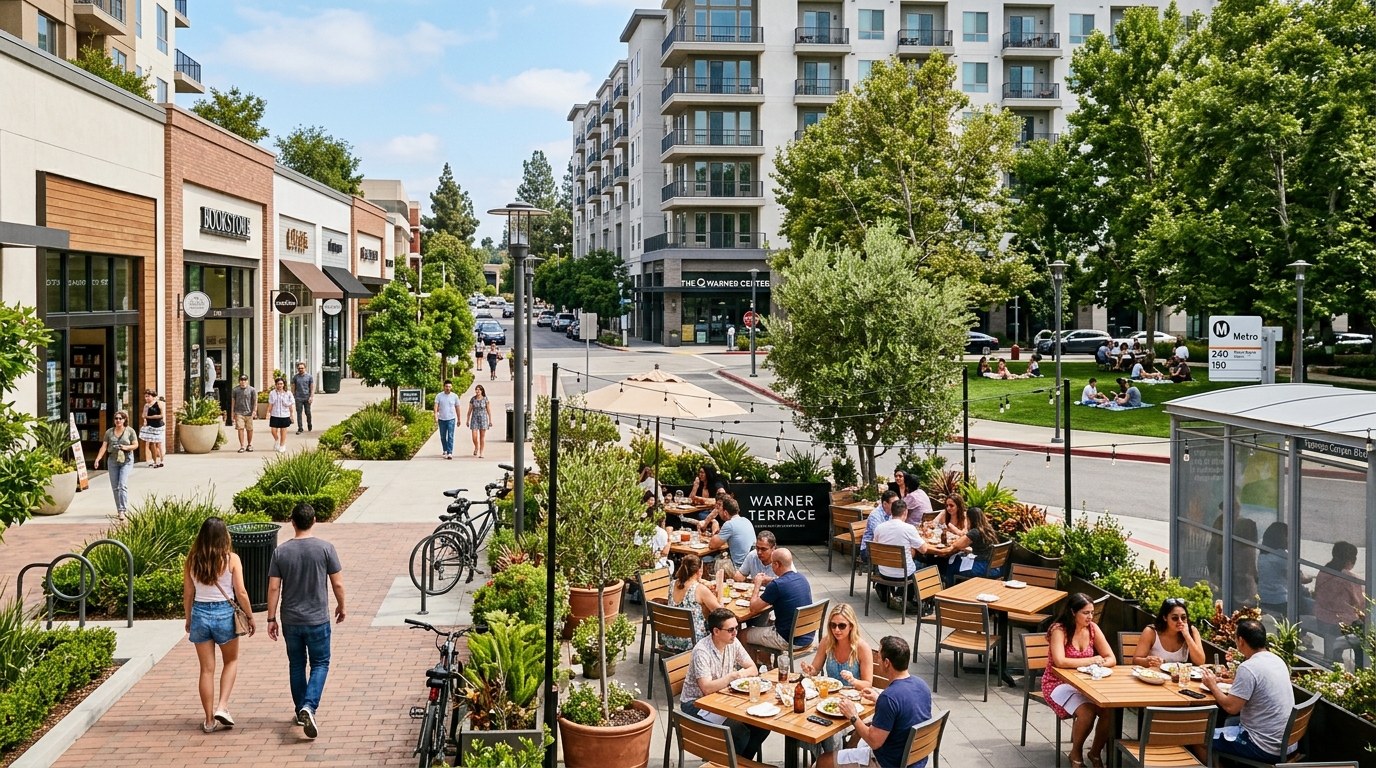
Warner Center is one of the most active districts in Woodland Hills.
It blends offices, shopping, restaurants, parks, transit access, and modern apartment living in one part of the San Fernando Valley. For renters who want a more connected Valley lifestyle, Warner Center can be a strong place to consider.
The area feels different from many parts of Woodland Hills. Instead of quiet hillside streets and single-family homes, Warner Center has a more urban-suburban layout with shopping centers, business hubs, apartment communities, wide roads, and growing walkability.
When planning a move to the West Valley, many renters ask the same question: is Warner Center a good place to live?
If you are exploring highly rated modern apartments near the Warner Center district, you will find an area that blends business convenience with shopping, dining, transit, and active local routines.
The Quick Verdict: Is Warner Center a Good Fit for You?
Yes, Warner Center can be a good place to live if you want a convenient Woodland Hills location with shopping, dining, transit access, parks, and modern apartment options nearby. It is a strong match for renters who want an urban-suburban lifestyle in the San Fernando Valley without living in Downtown Los Angeles. The main trade-offs are traffic on major roads, longer walking blocks, and a more business-district feel in some areas.
The Main Pros
- Shopping and dining access: Westfield Topanga and Topanga Village are major local hubs.
- Apartment options: Renters can find modern buildings with amenities and flexible layouts.
- Transit access: The Metro G Line gives riders a busway connection across the Valley.
- Local parks: Warner Center Park adds green space and community events.
- Job access: The area sits near major offices, medical services, and business centers.
- Car-optional potential: Some daily errands may be possible without driving, depending on where you live.
The Main Cons
- Traffic can be heavy: Topanga Canyon Boulevard, Ventura Boulevard, and freeway routes can slow down during peak hours.
- Blocks are long: Some trips look close on a map but may take 15 to 20 minutes on foot.
- Some areas feel corporate: Certain blocks still feel like a business district rather than a traditional neighborhood.
- Driving may still be useful: Warner Center is more walkable than many Valley areas, but Los Angeles is still car-oriented.
Ultimately, the area acts as a premier urban community in the San Fernando Valley, making it a strong match for residents who want city-style convenience without living in central LA.
The Warner Center Lifestyle: Dining, Shopping, and Parks
Warner Center’s lifestyle is built around convenience.
The district gives renters access to shopping, restaurants, offices, parks, and services within a compact area. That does not mean every trip is a five-minute walk, but it does mean many everyday needs are close by.
This is what gives the area its live-work-play feel.
Westfield Topanga and Topanga Village
Westfield Topanga and Topanga Village are two of the biggest lifestyle anchors in the area.
Together, they bring shopping, restaurants, coffee, entertainment, fitness, and gathering spaces into the district. For renters, this can make weekends and errands easier.
You may find:
- Restaurants and casual dining
- Coffee shops
- Retail stores
- Fitness and wellness options
- Movie and entertainment choices
- Outdoor dining areas
- Everyday shopping stops
This is one of the reasons Warner Center feels more active than a standard suburban neighborhood.
Instead of driving across the Valley for every meal or errand, residents may be able to stay closer to home.
Warner Center Park and Lou Bredlow Pavilion
Warner Center Park is another important local hub.
The park gives the district green space, open lawn areas, walking paths, and a gathering point for community events. The Lou Bredlow Pavilion is known locally for summer concerts and outdoor programming.
For renters, the park can support simple routines:
- walking after work
- relaxing outside
- meeting friends
- enjoying community events
- taking pets for fresh air
- stepping away from screens during the day
This matters because Warner Center is not only a shopping and office district. The park helps soften the area and gives residents a place to breathe.
From Business Park to Lifestyle District
Warner Center was once known more as an office and commercial area.
That is changing.
The Warner Center 2035 Plan is helping guide the area toward a more walkable, transit-oriented future. In simple terms, the goal is to support more housing, jobs, services, and mobility options in one district.
This is the urban-suburban shift.
Warner Center is becoming more like a “Downtown of the Valley,” with residential buildings, public transit, shopping, dining, offices, and community spaces working together.
From quick morning coffee runs to weekend outdoor events, this updated local neighborhood guide can help renters explore the top local spots first.
Apartment Living and Housing Options in the District
Warner Center apartment living is different from traditional Woodland Hills living.
Much of Woodland Hills is known for quiet residential streets, hillside homes, and suburban neighborhoods. Warner Center, by contrast, has more mid-rise buildings, apartment communities, offices, and commercial spaces.
For renters who want modern housing, this can be a major benefit.
What Renters Can Expect
Warner Center apartments often appeal to renters who want convenience and comfort in the same place.
Common apartment priorities may include:
- modern kitchens
- open layouts
- studio, one-bedroom, and two-bedroom options
- work-from-home space
- fitness amenities
- pool or lounge areas
- package delivery support
- controlled-access features
- parking options
- pet-friendly policies
- easy access to shopping and dining
Before signing a lease, it is important to evaluate your personal lifestyle needs so your space supports your actual daily routine.
A renter who works from home may need a quiet desk area. A couple may want more storage. Someone who hosts often may prefer a larger living room or open kitchen.
The best apartment is not only the newest one. It is the one that fits how you live.
Modern Layouts and Apartment Features
Finding the right space means exploring the variety of upscale housing options in Warner Center that support different renter needs.
Some renters want a smaller layout that is easy to maintain. Others need more room for a partner, roommate, home office, or guest space.
Prospective residents can review available studio, one, and two-bedroom floor plans and compare them with resort-style apartment amenities to see what best fits their budget and routine.
When comparing apartment options, think about:
- Layout: Does the space support your furniture and daily habits?
- Storage: Is there enough closet and cabinet space?
- Noise: Does the apartment face a major road or quieter interior area?
- Parking: Is parking included, assigned, or extra?
- Work setup: Is there space for a desk or home office?
- Amenities: Will you use the fitness center, pool, lounge, or shared spaces?
- Commute: Is the location practical for your job or school?
- Lease terms: Do the terms match your timeline?
A modern apartment in Warner Center can make daily life easier, but only if the building and layout match your needs.
Transit, Commuting, and Connectivity
Warner Center is well-connected for the San Fernando Valley, but commuters still need realistic expectations.
The area gives residents access to major roads, public transportation, shopping, and job centers. However, traffic can still be a major part of daily life.
Driving and Freeway Access
Warner Center sits near the US-101, also known as the Ventura Freeway.
This can help drivers reach other parts of Woodland Hills, Calabasas, Encino, Sherman Oaks, Burbank, Hollywood, and Downtown LA. It also gives access to Ventura Boulevard and other major Valley routes.
For commuters, this location can be helpful. But timing matters.
Traffic can be heavy during:
- weekday rush hour
- peak shopping times
- Friday afternoons
- weekend event periods
- holiday shopping seasons
- crashes or road work near freeway access points
Topanga Canyon Boulevard and Ventura Boulevard can also get busy, especially near commercial centers.
A commute that looks simple on a map may feel different at 8 a.m. or 5:30 p.m. Renters should test their actual route before moving.
Metro G Line and Car-Optional Living
Warner Center also has transit access through the Metro G Line, formerly known as the Orange Line.
The G Line is a busway route that connects across the San Fernando Valley, including service toward North Hollywood. From North Hollywood, riders can connect to Metro rail service for access toward Hollywood and Downtown LA.
This can be useful for renters who want to drive less.
Warner Center may support a car-optional lifestyle if you live close to:
- transit stops
- grocery stores
- restaurants
- shopping
- work
- fitness options
- parks
- daily errands
Still, car-optional does not mean car-free for everyone. Los Angeles is spread out, and many renters still keep a car for work, weekend plans, or trips outside the Valley.
Walkability: Useful, But Not Tiny
Warner Center is more walkable than many suburban Valley areas, but it is not a small traditional downtown.
This is an important detail.
The core area around Westfield Topanga, Topanga Village, offices, and apartment buildings can be walkable. But blocks are long, crosswalks matter, and major streets can make short distances feel longer.
A quick trip across the center can still take 15 to 20 minutes on foot.
That is not a bad thing. It just means renters should understand the scale.
Before choosing a building, test common walks:
- apartment to grocery store
- apartment to transit stop
- apartment to gym
- apartment to restaurant
- apartment to workplace
- apartment to park
The best Warner Center location is the one that makes your actual weekly routine easier.
Pros and Cons of Living in Warner Center
Warner Center has many benefits, but it is not the right fit for every renter.
A clear pros and cons list can help you decide if the area matches your lifestyle.
Pros of Living in Warner Center
- Convenient shopping: Westfield Topanga and Topanga Village are nearby.
- Dining variety: The area has casual, upscale, and quick-service options.
- Modern apartments: Renters can find newer layouts and amenities.
- Transit access: The Metro G Line supports travel across the Valley.
- Local employment: The area has offices, medical services, and business centers.
- Park access: Warner Center Park adds outdoor space and events.
- Urban-suburban lifestyle: The area blends city convenience with Valley space.
- Car-optional routines: Some daily errands may not require driving.
Cons of Living in Warner Center
- Traffic: Major roads can be busy during peak hours.
- Long blocks: Walking can take longer than expected.
- Corporate feel: Some streets still feel like office zones.
- Parking rules: Parking may vary by building, destination, or time of day.
- Urban noise: Streets near major roads may have typical city sounds.
- Cost: Modern apartment communities may cost more than older Valley rentals.
Warner Center works best for renters who value convenience, modern housing, and access to shopping, transit, and dining.
It may be less ideal for renters who want a quiet hillside setting or a traditional single-family neighborhood feel.
Who Is Warner Center Best For?
Warner Center can fit several renter types.
It is especially practical for people who want access to the West Valley without feeling disconnected from shopping, offices, and daily services.
Relocating Professionals
Warner Center can work well for people moving to the Valley for work.
The district is close to offices, healthcare employers, retail centers, and major roads. It can also help renters settle into LA with shopping, restaurants, and services nearby.
Luxury Apartment Renters
Renters looking for modern buildings may find Warner Center appealing.
The area includes apartment communities with upgraded finishes, shared spaces, parking, package systems, and lifestyle amenities.
Car-Optional Renters
Some renters want to drive less but still live in the Valley.
Warner Center can support this better than many suburban areas because of its transit access, retail centers, restaurants, and services.
Active Singles and Couples
Warner Center can be a good fit for renters who want dining, shopping, parks, fitness options, and weekend activity close to home.
It offers a more active lifestyle than many quieter residential pockets in the Valley.
Frequently Asked Questions About Living in Warner Center
Is Warner Center considered a comfortable place to live?
Warner Center is a planned business and residential district with active commercial areas, apartment communities, offices, shopping centers, and public spaces. Comfort can vary by block, building, traffic pattern, and personal routine, so renters should visit the exact area, check lighting and parking, and tour at different times of day.
Can you live in Warner Center without a car?
Some renters may be able to live in Warner Center without a car, especially if they live near shopping, dining, work, and the Metro G Line. However, Los Angeles is still car-oriented, so many residents keep a car for longer trips, weekend plans, or commutes outside the Valley.
What are the major employers located in Warner Center?
Warner Center includes a mix of employment sectors, including healthcare, insurance, financial services, professional offices, retail, and business services. Nearby medical centers, corporate offices, and shopping destinations help make the area useful for live-work routines.
How does Warner Center differ from the rest of Woodland Hills?
Much of Woodland Hills has a quieter suburban feel with single-family homes and hillside streets. Warner Center is the higher-density urban core, with modern apartment buildings, commercial centers, offices, transit access, shopping, dining, and a faster daily pace.
What are the noise levels like in Warner Center apartments?
Noise levels vary by building, floor, street, and apartment location. Units near Topanga Canyon Boulevard, Ventura Boulevard, shopping centers, or busy streets may hear more urban activity, while interior-facing or higher-floor units may feel quieter. Renters should ask about window insulation and tour at different times.
Are Warner Center communities pet-friendly?
Many modern apartment communities in Warner Center may offer pet-friendly policies or nearby walking areas, but rules vary by property. Renters should confirm breed restrictions, pet fees, deposits, monthly pet rent, and access to outdoor spaces before applying.
Final Verdict: Is Warner Center a Good Place to Live?
Warner Center can be a very good place to live for renters who want convenience, modern apartment options, shopping, dining, transit access, and an urban-suburban lifestyle in Woodland Hills.
It is not a quiet hillside neighborhood, and it is not fully car-free. Traffic, long blocks, and busy commercial areas are part of the experience.
But for many renters, those trade-offs are worth it.
Warner Center offers a practical mix of daily convenience, local employers, public transportation, modern apartments, restaurants, and community spaces. It gives residents access to the San Fernando Valley without feeling far from everyday essentials.
For renters who want a polished apartment community near Warner Center’s shopping, dining, and transit options, Skye at Warner Center can be a strong home base.
To ask about current availability, tour options, and floor plans, contact our leasing team today.
Source / Accuracy Note
This guide was created to help renters understand what it is like to live in Warner Center using local context, official planning information, transit references, renter-focused details, and neighborhood lifestyle research. Rental availability, amenities, traffic conditions, transit routes, employer presence, business hours, lease terms, parking rules, and local conditions can change, so renters should verify current details before making a decision.
The post Is Warner Center a Good Place to Live? A Renter’s Guide to Woodland Hills appeared first on Skye at Warner Center Blog.
]]>The post Warner Center vs Woodland Hills: Which Area Is Better for Renters? appeared first on Skye at Warner Center Blog.
]]>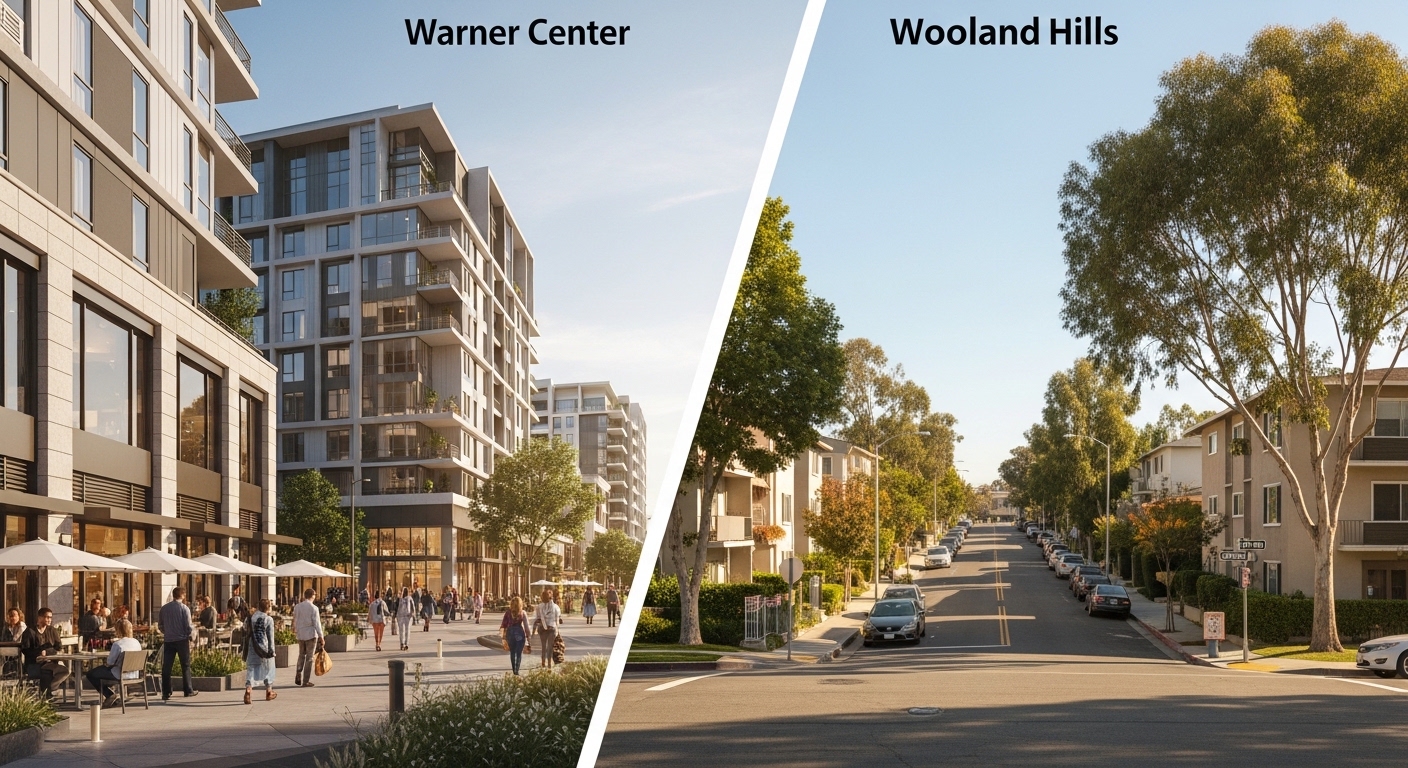
Choosing between Warner Center and Woodland Hills can feel harder than it sounds. Both are popular rental areas in the western San Fernando Valley, and both appeal to renters looking for convenience, comfort, and access to daily essentials. The challenge is that they offer very different living experiences.
For renters comparing apartments near Warner Center with options elsewhere in Woodland Hills, the real question is not just which area is nicer. It is which one fits your lifestyle better. This guide compares location, commute, apartment options, cost, and overall day-to-day living so you can make a more confident choice.
Key Points
- Warner Center offers better walkability and daily convenience
- Woodland Hills provides a quieter and more residential environment
- Commute and accessibility feel very different depending on where you live
- Apartment inventory and amenities are not always the same in both areas
- The right choice depends on your routine, priorities, and preferred lifestyle
Overview of Warner Center and Woodland Hills
Warner Center is a walkable urban hub, while Woodland Hills offers a quieter, more suburban residential environment. Even though Warner Center is part of Woodland Hills, renters often experience them as two different ways of living.
If you are still trying to picture how daily life feels in this part of Los Angeles, reading about what it’s like living in Warner Center and why renters choose this area can make the contrast much easier to understand.
Warner Center is more centralized and mixed-use. It is built around convenience, with retail, dining, offices, and apartment communities closer together. Woodland Hills is broader and more varied. Some parts feel active and connected, but many others are quieter, more spread out, and more car-dependent.
That difference shapes the type of renter each area attracts.
- Warner Center: Often appeals to renters who want easier access to shopping, dining, and everyday conveniences
- Woodland Hills: Often suits renters who prefer a calmer pace and a more traditional neighborhood feel
- Shared appeal: Both offer access to major roads, nearby destinations, and the broader Woodland Hills area
- Main distinction: Warner Center feels more lifestyle-driven, while Woodland Hills feels more residential
For some renters, that centralization is the biggest advantage. For others, a quieter environment matters more. The better option depends on how you want your daily life to feel, not just where the map places you.
Location, Commute, and Accessibility
Warner Center provides easier access to daily essentials and major roads, while Woodland Hills often requires more driving and longer daily travel. That does not mean Woodland Hills is inconvenient, but the day-to-day experience is usually less efficient.
Warner Center puts renters closer to places like Westfield Topanga, Ventura Boulevard, offices, restaurants, and entertainment. That concentration matters because it can reduce both driving time and planning. Instead of needing to cross larger stretches of Woodland Hills for errands or dining, many of those destinations are already nearby.
Woodland Hills, by contrast, is larger and more spread out. It can still offer excellent access, but convenience often depends more heavily on your exact street or pocket within the neighborhood. Two apartments in Woodland Hills can feel very different in terms of access and routine.
What this means for renters
- Walkability: Warner Center generally supports a more walkable lifestyle
- Driving needs: Woodland Hills often requires more driving for errands and dining
- Road access: Both connect well to major routes, but Warner Center feels more centralized
- Daily routine: Warner Center can make weekdays feel simpler and more efficient
This is especially important for renters who value a smoother routine. If you work nearby, like going out without a long drive, or want quicker access to everyday destinations, Warner Center often feels easier to live in. Woodland Hills may still be attractive, but it usually rewards renters who prioritize peace and space over convenience.
Apartment Options and Living Style
Warner Center offers newer, amenity-rich apartment communities, while Woodland Hills has a mix of older and updated housing options. This creates a clear difference in living style, even when prices may appear similar at first glance.
In Warner Center, apartment communities are often designed around a more modern renter experience. That usually means updated finishes, lifestyle-focused amenities, and layouts intended to feel efficient and contemporary. Woodland Hills offers more variety, but that variety can include older apartment stock, smaller-scale buildings, and less consistent amenity packages.
If your decision is heavily tied to layout and unit type, you can view available studio, one-, and two-bedroom floor plans near Warner Center to compare the kind of options that are often associated with newer rental communities in this area.
Common differences renters may notice
- Warner Center inventory: More likely to include newer apartment communities
- Woodland Hills inventory: More likely to include a mix of older and renovated options
- Amenity expectations: Warner Center often leans more toward lifestyle amenities
- Living style: Woodland Hills may feel more traditional, while Warner Center feels more contemporary
Apartment choice also affects how a space works for everyday life. A renter working from home may care more about flow, light, and usable shared spaces. Someone who mostly wants a peaceful place to come home to may care less about newer finishes and more about quiet surroundings.
That is why the better area is not automatically the one with the “better” apartment. It is the one that gives you the kind of apartment experience you actually want.
Cost of Living and Rent Differences
Warner Center may have a slightly higher rent, but often delivers better value through convenience and amenities, while Woodland Hills may offer lower base pricing with trade-offs. This is one of the most important parts of the comparison because renters often look at the price first.
The key is not just asking which area is cheaper. It is asking what you get for what you pay.
A lower monthly rent in Woodland Hills may come with compromises such as longer drives, fewer amenities, or older apartment stock. A higher rent in Warner Center may include the convenience of being near shopping, dining, fitness options, and key routes. For many renters, that difference changes how “expensive” a place really feels.
Side-by-side comparison
| Category | Warner Center | Woodland Hills |
|---|---|---|
| Rent level | Often slightly higher | Can offer wider pricing range |
| Value driver | Convenience and amenities | More variety and quieter pockets |
| Hidden trade-offs | Higher monthly base rent | More driving, less walkability |
| Best for | Renters who value efficiency | Renters who prioritize calmer living |
Timing can also affect how much you pay. If you want to compare market patterns more strategically, understanding the best time to rent an apartment in Los Angeles to find the right deal can help you approach pricing with a smarter mindset.
Price alone rarely tells the full story. Renters who value convenience often feel that paying somewhat more for Warner Center makes sense. Renters who care more about lowering the monthly number may be willing to accept the trade-offs that come with Woodland Hills.
That is why value matters more than simple cost. Your apartment budget should be compared against what the location saves you in time, access, and daily ease.
In the end, timing your move can also shape how much flexibility you get. It is worth learning about the cheapest months to move into an apartment in Los Angeles and save on rent if savings are one of your top priorities.
Lifestyle, Dining, and Things to Do
Warner Center offers a more walkable lifestyle with easy access to dining, shopping, and entertainment, while Woodland Hills provides a quieter but less centralized experience. For many renters, this section is the real deciding factor.
Location is not just about commute. It is also about how your life feels after work, on weekends, and during everyday errands. Warner Center stands out because so much of the lifestyle is built into the area itself.
The surrounding environment matters just as much as the apartment, and exploring top things to do in Warner Center including dining, shopping, and entertainment options helps show why renters often see the area as more than just a place to sleep.
Lifestyle differences that matter
- Dining access: Warner Center puts restaurants and casual dining closer to home
- Shopping convenience: Retail and lifestyle destinations are easier to reach without planning a full outing
- Entertainment options: Warner Center feels more active for renters who like staying connected to nearby activity
- Residential quiet: Woodland Hills offers a calmer setting for renters who prefer less foot traffic and noise
Warner Center tends to support a more “out your door” lifestyle. Woodland Hills often supports a more “drive when needed” lifestyle. Neither is automatically better, but they create very different rhythms.
For renters who enjoy convenience, quick errands, and nearby places to go, Warner Center often feels more satisfying. For renters who prefer a quieter home base and do not mind driving, Woodland Hills may feel more comfortable.
Which Area Is Better for Different Types of Renters
Warner Center is typically better for renters who prioritize convenience, while Woodland Hills suits those seeking a quieter environment. This is where the comparison becomes more personal.
The better area depends on the type of renter you are.
Warner Center may be the better fit for
- Young professionals: Better access to shopping, dining, and daily convenience
- Convenience-focused renters: Easier everyday routine with less driving
- Amenity-driven renters: More likely to prefer newer, lifestyle-oriented communities
- Active renters: Better for those who want to stay close to things to do
Woodland Hills may be the better fit for
- Quiet-seeking renters: Better for those who want a slower and more residential pace
- Privacy-focused renters: More appealing if peace matters more than walkability
- Traditional renters: Better for those comfortable with a more suburban routine
- Flexible commuters: Easier to justify if daily convenience is not the top priority
This section matters because many renters are not just choosing an apartment. They are choosing a routine. Warner Center often supports a more efficient and connected one. Woodland Hills often supports a quieter and more separated one.
Final Verdict: Is Warner Center or Woodland Hills Better?
Warner Center is generally the better choice for renters who value accessibility, walkability, and modern living, while Woodland Hills appeals to those seeking a more suburban atmosphere. That is the clearest way to summarize the comparison.
Woodland Hills is not a weak option. It has clear strengths, especially for renters who want a quieter environment and do not mind depending more on a car. But if the goal is to choose the area that offers the strongest mix of convenience, access, and lifestyle, Warner Center usually stands out.
The reason is simple. It does more for the average renter’s daily life.
- It reduces driving for common errands
- It offers easier access to shopping and dining
- It tends to feature newer apartment communities
- It supports a more connected and efficient routine
For many renters, those benefits are what make one place feel better than another even before they compare the apartments themselves.
Explore Living Options Near Warner Center in Woodland Hills
Renters looking for convenience, modern living, and accessibility will find strong options near Warner Center that align with both lifestyle and daily needs. If your priority is a connected location with easier access to local hotspots, Warner Center remains one of the strongest rental choices in Woodland Hills.
If you are ready to narrow down your search, exploring apartments near Warner Center with modern design and easy access to local hotspots is a practical next step toward finding a home that fits your routine.
Before making a final decision, it also helps to review what to look for when renting near Warner Center before making a decision so you can compare options with more clarity and confidence.
FAQ
Is Warner Center more expensive than Woodland Hills?
Warner Center may have slightly higher rent in some cases, but it often offers better overall value through convenience, amenities, and walkability.
Which area is more walkable?
Warner Center is more walkable. It is designed around easier access to shopping, dining, and daily essentials.
Is Woodland Hills quieter than Warner Center?
Yes. Woodland Hills generally feels quieter and more residential, especially in areas farther from the more active commercial zones.
Where should young professionals live?
Many young professionals prefer Warner Center because it offers a more connected lifestyle and easier access to daily conveniences.
Is Warner Center a good place to rent?
Yes. It is a strong option for renters who want accessibility, modern apartment living, and a more lifestyle-driven location.
What are the main differences between Warner Center and Woodland Hills?
Warner Center is more centralized, walkable, and modern, while Woodland Hills is broader, quieter, and more suburban in feel.
The post Warner Center vs Woodland Hills: Which Area Is Better for Renters? appeared first on Skye at Warner Center Blog.
]]>The post What to Look for When Renting Near Warner Center appeared first on Skye at Warner Center Blog.
]]>
Choosing the right apartment near Warner Center is no longer just about availability—it’s about making a smart, informed decision based on lifestyle, convenience, and long-term value. With many apartments near Warner Center available in Woodland Hills, CA, renters are now comparing options more carefully before committing.
Instead of focusing only on price or appearance, the best approach is to filter options based on what truly impacts your daily life. This guide breaks down the key factors to help you confidently choose the right apartment.
Key Points
- Location affects convenience, commute, and overall lifestyle
- Layout should match your daily routine and future needs
- Amenities should be useful, not just visually appealing
- Pricing should be evaluated based on value, not just cost
- A checklist simplifies decision-making and comparisons
Start With Location Within Warner Center
Location determines accessibility, convenience, and daily lifestyle when renting near Warner Center. Not all areas within Woodland Hills feel the same, and choosing the right spot can significantly affect your routine.
Apartments closer to Westfield Topanga and Ventura Boulevard provide better walkability and access to dining, shopping, and entertainment. Meanwhile, areas slightly toward Canoga Park may offer a quieter environment but less immediate access to central hubs.
When evaluating location, consider:
- Walkability to shopping and dining
- Access to major roads and Ventura Boulevard
- Proximity to work or daily destinations
- Balance between quiet surroundings and central convenience
Choosing a well-positioned apartment near Warner Center can make everyday living more efficient, especially if accessibility is a priority.
Choose the Right Apartment Layout for Your Lifestyle
Choosing the right layout depends on how you use your space daily. A functional apartment should support your routine, whether that includes working from home, relaxing, or hosting guests.
Think beyond square footage and focus on usability:
- Does the layout feel open and practical?
- Is there enough storage for long-term use?
- Can the space adapt to lifestyle changes?
Many renters find that 1 and 2 bedroom apartments near Warner Center provide the flexibility needed for both comfort and functionality.
Understanding how layouts translate into real-life living is key, which is why reviewing how different apartment layouts fit your lifestyle can help you better visualize how your daily routine will fit into each space.
Evaluate Amenities Based on Daily Use
Amenities should support your routine and improve convenience. While many properties highlight luxury features, the real value comes from amenities you actually use.
Focus on features that enhance everyday living:
- Fitness center for convenience and consistency
- Pool for relaxation and downtime
- Lounge or shared spaces for work or social use
- Secure parking and controlled access
Many renters prioritize modern apartments with amenities that provide both comfort and practical value.
Beyond the apartment itself, the surrounding neighborhood also shapes your experience, and exploring things to do and lifestyle in Warner Center helps you understand what daily life in the area truly feels like.
Understand Pricing vs Value in Warner Center
Pricing should be evaluated alongside value, not just cost. Choosing the lowest rent can often lead to trade-offs in location, space, or comfort.
Instead, evaluate what you're getting in return:
- Location within Warner Center
- Size and layout of the apartment
- Included amenities
- Additional costs such as parking or utilities
Looking at broader rental comparisons, such as understanding the cost of living in Warner Center, can provide helpful context when assessing overall affordability.
Check Commute and Accessibility
Commute and accessibility impact daily convenience and stress levels. Even the best apartment can feel inconvenient if your daily travel is inefficient.
Before choosing a location, consider:
- Distance to work or frequently visited places
- Traffic during peak hours
- Access to major roads and freeways
- Availability of public transportation
Planning ahead by reviewing transportation and commuting options in Warner Center can help you avoid unnecessary challenges in your daily routine.
Use a Simple Decision Checklist Before Choosing
A checklist helps renters compare apartments objectively and avoid emotional decision-making.
Use this framework:
- Location: Is it convenient for your lifestyle?
- Layout: Does it support your routine?
- Amenities: Will you use them consistently?
- Price: Does it match the value offered?
- Commute: Is it manageable daily?
This approach makes it easier to narrow down options and choose with confidence.
Common Mistakes Renters Make (And How to Avoid Them)
Avoid focusing only on price or aesthetics without considering practicality. Many renters overlook key factors that impact long-term satisfaction.
Common mistakes include:
- Choosing based only on the lowest rent
- Ignoring commute and accessibility
- Overvaluing amenities that go unused
- Not planning for future space needs
Being aware of these mistakes helps you make a more balanced and informed decision.
Find Your Apartment Near Warner Center in Woodland Hills, Today!
The right apartment balances lifestyle, comfort, and accessibility. Warner Center remains one of the most desirable areas in Woodland Hills because of its convenience, walkability, and access to key destinations.
If you're ready to take the next step, you can reach out to our leasing team to ask about availability, schedule a tour, and explore apartments that match your lifestyle and goals.
FAQ
What should I look for when renting near Warner Center?
Focus on location, layout, amenities, pricing, and commute to ensure the apartment fits your lifestyle and daily needs.
Are apartments near Warner Center expensive?
Pricing varies, but many renters find the value justified due to location, convenience, and amenities.
What amenities matter most?
Fitness centers, pools, and secure parking are among the most practical and commonly used features.
Is Warner Center a good place to live?
Yes, it offers strong accessibility, walkability, and proximity to shopping, dining, and business hubs.
Should I choose a 1-bedroom or 2-bedroom apartment?
It depends on your needs. A 2-bedroom offers more flexibility, while a 1-bedroom is simpler and more cost-efficient.
How important is location within Warner Center?
Very important. Even small location differences can affect commute, convenience, and lifestyle.
The post What to Look for When Renting Near Warner Center appeared first on Skye at Warner Center Blog.
]]>The post Transportation in Warner Center CA: Easy, Connected, Car-Optional Living appeared first on Skye at Warner Center Blog.
]]>
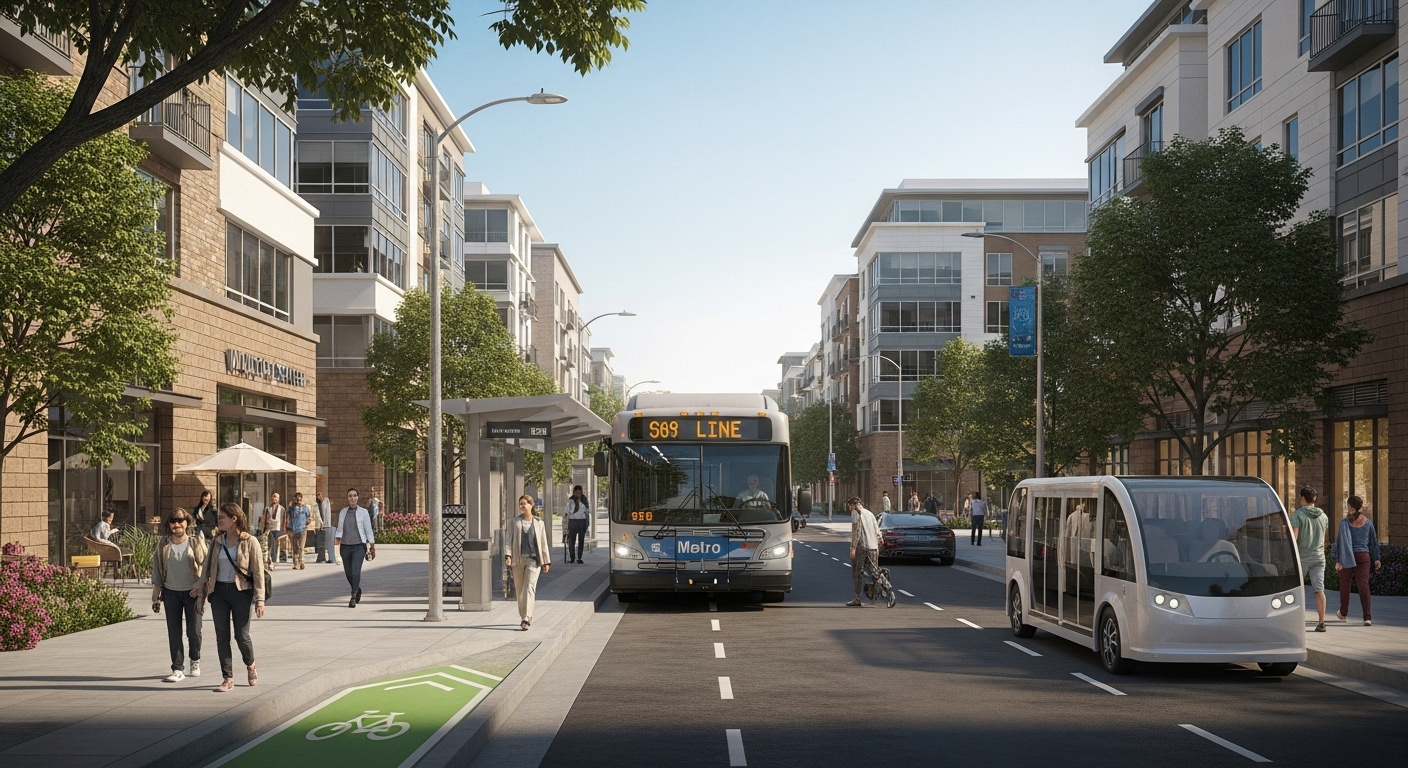
Transportation in Warner Center CA is no longer just about getting from point A to point B. It is a daily lifestyle benefit. Warner Center has been planned as a modern “15-minute city,” where many errands, jobs, and social spots are close enough to reach without driving. For eco-friendly professionals, the big question is simple: how easy is it to live here without relying on a car?
The answer is that Warner Center offers a transit-first setup built around public transportation, electric shuttles, walking paths, and bike lanes. This guide explains how these systems work together, why they matter for renters, and how they reduce stress, costs, and environmental impact for people choosing to live here.
Key Points
- Warner Center supports car-optional living
- Public transit, shuttles, and walking work together
- Electric and zero-emission options are expanding
- Last-mile solutions reduce commute stress
- Transportation access improves daily quality of life
Why Transportation Matters When Choosing a Home in Warner Center
Transportation is one of the biggest hidden costs of daily life. Car payments, fuel, parking, insurance, and maintenance add up quickly. In Los Angeles, time spent in traffic also affects work-life balance and mental health. That is why many renters now look for neighborhoods where daily travel is easier and more flexible.
Warner Center was designed as a transit-oriented community. Homes, offices, shops, and parks are grouped closely together, which reduces the need for long drives. Walkable streets and reliable transit options allow people to plan their days more efficiently. Instead of scheduling life around traffic, residents can move between work, errands, and social plans with less effort.
This approach fits well with people who want to reduce their environmental impact. Fewer car trips mean lower emissions and less fuel use. When transportation is built into the neighborhood design, it becomes part of the overall living experience. That connection between housing and mobility is a key reason many people choose life in Warner Center when deciding where to live.
The Metro G Line: The Backbone of Warner Center Transit
The Metro G Line is the main public transit option serving Warner Center. It operates in dedicated bus-only lanes, which helps it stay reliable even during busy traffic hours. Because the buses do not share lanes with cars, travel times are more predictable than driving.
The G Line connects Warner Center to the North Hollywood transit hub. From there, riders can transfer to rail lines that reach Hollywood, Downtown Los Angeles, and other major job centers. This makes it possible to commute long distances without owning a car.
Key benefits of the Metro G Line include:
- Dedicated lanes that avoid traffic delays
- Frequent service throughout the day
- Easy connections to other bus and rail routes
- Lower cost compared to driving
For many residents, the G Line supports both work commutes and evening plans. It also makes it easier to enjoy nightlife in Warner Center without worrying about parking or driving home late.
Electric Shuttles and Last-Mile Solutions
Large transit lines work best when paired with short-distance options. In Warner Center, electric shuttles help cover those smaller trips between transit stops, offices, shops, and homes. These services reduce the need for short car rides, which are often the least efficient and most polluting.
Electric shuttles in Warner Center often follow flexible neighborhood routes. Riders can use them for quick trips to lunch, meetings, or nearby parks. Because they run on clean energy, they support the area’s zero-emission goals.
Last-mile solutions are helped by:
- Filling gaps between transit stops and destinations
- Making public transit more convenient
- Reducing short car trips
- Supporting sustainable transportation choices
These systems also connect well with outdoor and active living. Many residents combine shuttle rides with walking or biking to enjoy outdoor activities in Warner Center while still saving time.
Metro Micro: Flexible Transit for Everyday Errands
Metro Micro is an on-demand public transit service designed for short trips. Riders use an app to request a ride, and a small van picks them up nearby. Unlike ride share services, Metro Micro is part of the public transit system and is priced affordably.
This service works best for errands, off-peak travel, or trips that do not align perfectly with bus schedules. It is especially helpful for last-mile travel from major transit stops to residential buildings.
Metro Micro is useful because it:
- Offers flexible pickup and drop-off locations
- Costs less than most rideshare options
- Integrates with buses and rail
- Reduces the need to own a car
For renters comparing neighborhoods, access to services like this makes a difference. It shows how transportation options connect directly to housing in Warner Center and daily convenience.
Walking and Biking in Warner Center
Walking and biking are core parts of transportation in Warner Center CA. The neighborhood features wide sidewalks, shaded paths, and clearly marked bike lanes. These design choices make it safer and more comfortable to travel without a car.
Many daily needs can be met on foot or by bike. Grocery stores, cafés, offices, and parks are often within a short distance. This supports healthier routines and lowers transportation costs.
Walking and biking offer benefits such as:
- Reduced stress and travel time
- Improved physical health
- Lower environmental impact
- Stronger community interaction
The Warner Center Transit Hub: Connecting It All
The Warner Center Transit Hub acts as the central connection point for the neighborhood. Located along Owensmouth Avenue, it brings together multiple bus routes in one place. This reduces transfer time and simplifies travel planning.
From the hub, riders can reach destinations across the San Fernando Valley and into nearby counties. Having one central location for connections makes public transit easier to understand and use, even for people new to the area.
The hub improves transportation by:
- Centralizing major bus routes
- Reducing confusion during transfers
- Expanding regional access
- Supporting car-optional living
This setup helps residents move easily between work, home, and recreation while staying connected to the rest of Los Angeles.
Can You Really Live in Warner Center Without a Car?
- Some trips may still be easier with a car.
- Public transit covers most daily needs
- Electric shuttles and Metro Micro fill service gaps
- Walking and biking handle short trips
Living without a car in Warner Center is realistic for many people. While certain edge cases may still require a vehicle, most daily activities can be handled through transit, walking, or biking. The key is having multiple options that work together.
Comparison Table
| Factor | Car-Dependent Suburb | Transit-Oriented Warner Center |
|---|---|---|
| Monthly cost | High | Lower |
| Commute time | Unpredictable | More consistent |
| Environmental impact | High emissions | Reduced emissions |
| Daily stress | Traffic-based | Lower stress |
FAQ
How do I get around Warner Center without a car?
You can use the Metro G Line, electric shuttles, Metro Micro, walking paths, and bike lanes.
Is public transportation reliable in Warner Center?
Yes. Dedicated lanes and frequent service make transit dependable.
What is the Metro G Line?
It is a bus rapid transit line that connects Warner Center to North Hollywood and beyond.
Is Metro Micro affordable?
Yes. It is priced lower than rideshare services and accepts transit payment options.
Can I bike safely in Warner Center?
Yes. Dedicated bike lanes and wide paths support safe biking.
How walkable is Warner Center?
Many daily errands and activities are within walking distance.
Living Where Transportation Works for You
Transportation shapes how a neighborhood feels every day. In Warner Center, transit, walking, and clean-energy options work together to support a simpler routine. If you want to live in the center of this connected network and enjoy easy, car-optional travel, you may want to explore a modern apartment near Warner Center as a home base designed around modern mobility.
The post Transportation in Warner Center CA: Easy, Connected, Car-Optional Living appeared first on Skye at Warner Center Blog.
]]>The post How Quickly Can You Move Into a New Apartment in LA? appeared first on Skye at Warner Center Blog.
]]>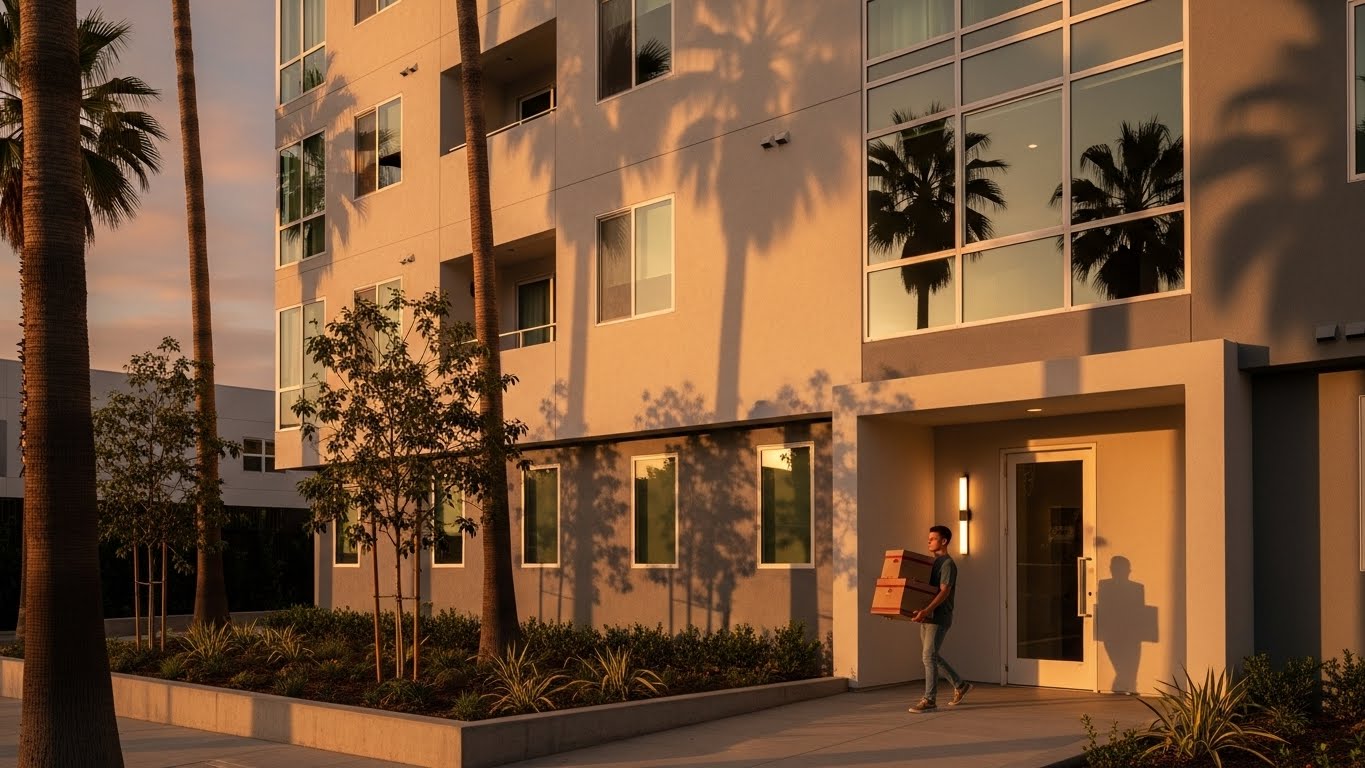
Key points
• Some renters can move into an LA apartment within a week, but 1–4 weeks is the realistic timeline
• Move-in speed depends on documents, landlord screening, and unit availability
• Preparing early and understanding rental requirements can significantly shorten your move
• Apartment search strategy, scheduling movers, and managing lease timing all affect how fast you can relocate
If you’re wondering how quickly you can move into a new apartment in the Los Angeles area, the answer depends on how prepared you are, what the landlord requires, and how soon the unit is ready. Some renters move within a few days, but most will need anywhere from one to four weeks to complete the apartment search, application, lease approval, and move-in process.
This guide breaks down realistic timelines, the steps involved in moving into an apartment, what can accelerate your move, and what might slow it down. Whether you’re relocating across LA or moving from another state, knowing how the moving process works helps you plan with confidence.
Typical Move-In Timelines for an Apartment in Los Angeles
Same-Week Move-In (Fastest Option, Less Common)
Some renters can move-in within a week, especially if:
- The apartment is already vacant
- You have your documents ready
- The landlord uses fast digital screening
- You can book a moving company on short notice
- You’re flexible with move-in date and layout options
This scenario is more likely when you're looking to rent a studio or smaller layout, where turnover is higher. However, moving this fast often means fewer choices and less negotiating power.
1–2 Week Move-In (Most Common for Prepared Renters)
A one- to two-week timeline is typical for renters who:
- Start looking for an apartment early
- Gather documents before applying
- Respond quickly to landlord requests
- Have flexible schedules for tours
- Can finalize decisions without delay
During this period, you will:
- Tour apartments
- Submit applications
- Pass credit and background checks
- Review and sign the lease agreement
- Organize utilities and movers
If you stay organized, this is the most comfortable timeline for moving into a new apartment in LA.
3–4 Week Move-In (Ideal When Coordinating With Your Current Lease)
If your current lease ends soon—or if you must vacate on a specific move date—three to four weeks gives you:
- Enough time to compare multiple apartments
- Space to negotiate your rent amount
- Time to review lease terms calmly
- Flexibility to extend your current lease month-to-month
- Room to finalize move-in without rushing
This timeline is best for renters balancing jobs, families, or relocation logistics.
Step-by-Step Timeline: From Apartment Search to Move-In
1. Start Looking for an Apartment Early (7–21 Days Before Move-In)
Most renters start their apartment search 30 days before their move date. This is especially true in neighborhoods with high demand—Downtown LA, Culver City, the Westside, and Manhattan Beach.f
During this stage, you should:
- Use Zillow, Apartments.com, and local listings
- Identify your preferred neighborhoods
- Compare average rent and amenities
- Ask about earliest move-in dates
- Tour apartments in person or virtually
Starting early ensures you have enough time to find a place that fits your budget and lifestyle.
2. Prepare Documents Before You Apply
Having your documents ready can speed up the move-in process significantly. LA landlords commonly require:
-
Completed rental application
- Pay stubs or proof of income
- Government-issued ID
- Credit authorization
- Employment details
- Prior landlord references (when needed)
Some communities may request bank statements or a higher security deposit, especially when a renter is new to the city or moving into an apartment with higher rents.
3. Application and Screening (1–5 Days)
After you find the perfect place, you’ll submit an application. Screening usually includes:
-
Credit check
- Rental history review
- Background check
- Employment and income verification
Digital systems allow some landlords to approve applicants within 24–48 hours, while others may take several days. If you’re looking to rent quickly, communicate your preferred move-in date right away.
4. Lease Agreement and Signing (1–3 Days)
Once approved, you’ll receive a lease agreement. Before you sign a lease, review:
-
Rent amount and due date
- Lease length (12-month, 13-month, or month-to-month)
- Move-in date and prorated rent
- Utility responsibilities
- Pet, amenity, and parking policies
In some parts of LA, the rent stabilization ordinance affects renewal terms and allowable increases. Make sure you understand anything you’re agreeing to before signing.
5. Scheduling Movers and Managing Moving Costs (3–10 Days)
The next step involves organizing your moving process:
-
Book a moving company early
- Confirm elevator reservations and loading areas
- Estimate moving expenses
- Prepare for moving day
- Transfer or set up utilities
If you’re moving during high-demand months, availability of moving companies may be limited, and pricing may be higher. If possible, book your mover well in advance.
Factors That Affect How Quickly You Can Move Into an Apartment
Landlord Requirements and Screening Time
Every landlord has different policies. Some require only basic documents, while others may ask for:
- Additional pay stubs
- Bank statements
- Proof of savings
- More references
Submitting everything promptly helps your move-in stay on schedule.
Unit Availability and Turnover Time
If you're moving into an apartment that is already vacant, you may be able to move quickly. But if the unit is still occupied, you may need to wait for:
- The tenant to vacate
- Cleaning and repairs
- Amenity checks
- Final inspection
This can add several days—or even weeks—to your move-in timeline.
Your Current Lease and Notice Period
Check your current lease agreement to avoid overlap or gaps. Most tenants must provide 30 days’ notice before they vacate. If your current lease ends soon, plan your apartment search well in advance to avoid last-minute stress.
Budget, Moving Costs, and LA Rental Market Conditions
Your budget affects how quickly you can find a place. If you're looking for a specific rent amount or cost-effective options, you may need more time to compare listings in the LA rental market.
Moving costs, deposit requirements, and average rent differences between neighborhoods also affect your timeline.
How Soon Should You Start Looking for a New Apartment?
Here are recommended timelines based on your situation:
Moving on Short Notice
Plan 7–10 days ahead, focus on ready-to-move units, and be flexible.
Moving Within the Los Angeles Area
Plan 2–4 weeks ahead to compare options, tour apartments, and align with your move date.
Relocating From Another State
Plan 30–45 days ahead to complete virtual tours, screening, and logistics.
Planning well in advance gives you enough time to find a place that fits your needs.
Tips to Move Into an Apartment Faster
Clarify Your Must-Haves Before Your Search
Before you start looking for an apartment, decide your:
- Budget and preferred rent amount
- Neighborhoods
- Must-have amenities
- Commute factors
- Pet or parking needs
This prevents wasted time and helps you find a place more quickly.
Keep a “Renter File” Prepared
Have these documents ready:
- ID
- Pay stubs
- Employer information
- Past landlord references
- Bank statements if needed
Being prepared helps speed up lease processing.
Focus Your Apartment Search
Narrow your options to neighborhoods you truly want to live in, whether it's Downtown LA, the Westside, or a quieter pocket in the Valley. A focused approach reduces the time you’ll spend touring unfitting units.
Understand Rental Seasonality
While this guide focuses on the move-in process—not on pricing—seasonality still affects how busy buildings are. If you want insights on best times to move, you can explore the best time to rent an apartment in Los Angeles for timing strategies.
Moving Into an Apartment at Skye Warner Center
If you're considering the Warner Center area, communities like Skye Warner Center offer modern layouts and day-to-day conveniences that can make moving into an apartment feel smoother. Touring during slower periods also lets you see the space without competing with crowds.
You can visit the available floor plans, explore the community amenities, or learn more about life at Skye Warner Center whenever you're ready.
Frequently Asked Questions About Moving Quickly in LA
How quickly can I move into an apartment in Los Angeles?
Most renters move within one to four weeks, depending on screening, unit availability, and how fast they can organize movers and utilities.
Can I move in within just a few days?
Yes, but only when the apartment is vacant, your documents are prepared, and the landlord approves your application immediately.
When should I start looking for an apartment?
Most renters start looking for a new apartment 30–45 days before their preferred move-in date.
Do I have to wait until my current lease ends before applying?
No. Many renters secure a new apartment before their current lease ends to avoid overlap or rushed decisions.
What helps speed up the move-in process?
Being prepared with documents, knowing your budget, focusing your apartment search, and communicating your move-in date clearly.
How Quickly Do You Want Your Next Move to Happen?
Moving into an apartment in Los Angeles doesn’t have to be stressful or unpredictable. The more prepared you are—and the earlier you begin your search—the smoother the process becomes. If Warner Center is on your list of neighborhoods to explore, reviewing the available homes at Skye Warner Center can help you get a feel for what living in this part of LA is like.
The post How Quickly Can You Move Into a New Apartment in LA? appeared first on Skye at Warner Center Blog.
]]>