
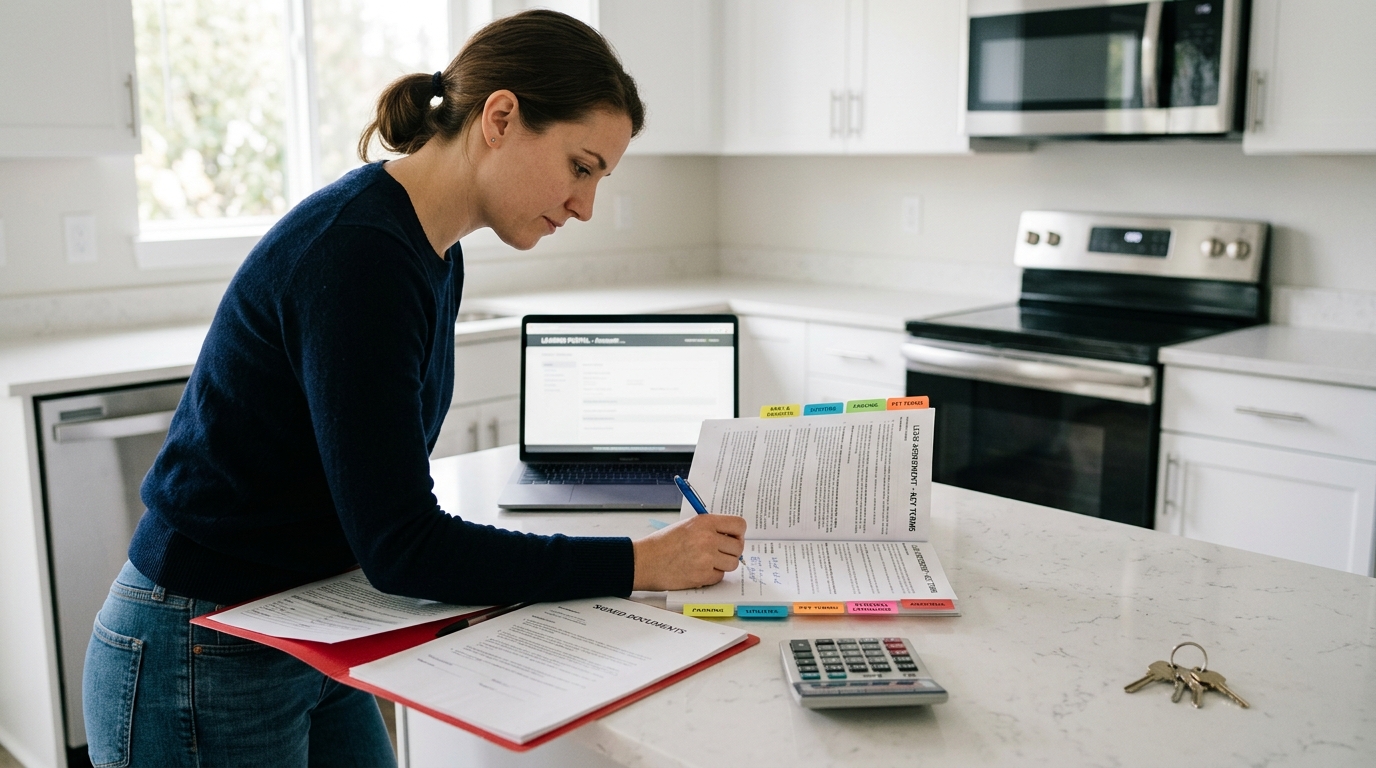
Once you have chosen a rental home, the next step is reading the leasing paperwork carefully. The contract sets out the rent, dates, required payments, utilities, occupancy, parking, pets, maintenance responsibilities, renewal terms, and other policies.
Skye at Warner Center is one community renters may consider while they explore modern apartment living near Warner Center.
This apartment lease checklist near Warner Center can help renters review rent, fees, utilities, parking, pets, renewal terms, and addenda before signing.
Quick Answer: What Should You Look for in an Apartment Lease?
Check the leaseholders’ names, unit number, start and end dates, monthly rent, payment due date, required fees, utilities, vehicle arrangements, pet terms, insurance requirements, occupant and guest rules, maintenance responsibilities, renewal language, notice requirements, early-termination terms, and every referenced addendum.
Important promises or changes should also appear in the rental contract or other signed documentation. Read the complete set of documents and ask about anything you do not understand.
1. Start With the Names, Apartment, and Dates
Begin with the basic details:
- Names of all leaseholders
- Property address and unit number
- Rental start and end dates
- Possession or move-in date
- Monthly rent
- Payment due date
- Accepted payment methods
If different term lengths are available, make sure the final contract reflects the option you selected and the price connected to it.
The property’s frequently asked questions currently state that short-term options, including three- and nine-month terms, may be offered for an additional fee. Availability and pricing may change.
At Skye at Warner Center, use the FAQ and leasing team as starting points, then make sure the final rental contract reflects the terms for the specific apartment.
2. Check Base Rent and Every Required Payment
Base rent may be only one part of your total housing expense. Look for recurring fees, separately billed utilities, vehicle-related costs, applicable pet expenses, storage, insurance requirements, late-payment fees, returned-payment charges, and other amounts listed in the main document or policy attachments.
For each payment, determine:
- Whether it is one-time or recurring
- When it is due
- Who receives it
- Whether it is refundable, when applicable
- Whether the amount can change during the rental period
If the final paperwork differs from a verbal or emailed quote, stop and resolve the difference. For broader budgeting help, use the guide to calculating the cost of moving into an LA apartment.
3. Check Utilities, Parking, Pets, and Insurance
These everyday policies may appear in the main contract or separate attachments. Read both.
| Lease Area | What to Clarify |
|---|---|
| Utilities | What is included, what the renter pays, how billing works, and whether accounts must be opened |
| Parking | Assigned spaces, availability, monthly costs, access, guest rules, and EV-charging terms |
| Pets | Approval, count or size limits, breed or species restrictions, deposits, monthly pet rent, and documentation |
| Insurance | Required coverage, liability limits, proof requirements, approved providers, and deadlines |
Utilities are not automatically included. A garage does not always mean a space is assigned, included, or free. A pet-friendly community may still have approval requirements and restrictions.
Make sure the terms that affect your household are clearly documented.
4. Check Occupants, Guests, and Community Policies
Find the section identifying authorized occupants and explaining guest or shared-space requirements. These provisions may cover:
- Guest limits or registration
- Smoking
- Packages
- Noise
- Common-area access
- Occupancy limits
- Community conduct
Make sure every intended occupant is identified correctly.
If the contract refers to a resident handbook, rules and regulations, or another policy document, obtain that document and read it. A referenced policy may become part of the terms even when it is separate from the main pages.
5. Understand Maintenance and Alteration Responsibilities
Look for instructions covering maintenance requests, emergency contacts, renter responsibilities, painting, wall mounting, fixture changes, and other alterations.
The practical question is: What must you do before changing anything in the home?
A small or temporary change is not necessarily allowed. Check whether approval must be requested and whether it needs to be documented.
California Department of Real Estate guidance recommends reading the entire contract and any documents it references. If an important maintenance or alteration provision is difficult to understand, ask how it applies before you commit.
6. Check Renewal, Notice, and Early-Termination Terms
Read what happens when the rental period ends. Look for:
- Renewal procedures
- Month-to-month language
- Required notice periods
- How and where notice must be delivered
- Early-termination provisions
- Assignment or subletting rules
- Any related payments or conditions
Do not assume every California rental contract uses the same notice period, renewal process, early-departure provision, or subletting policy.
Use the wording in your own documents. If you have legal questions about how a provision applies to your situation, seek qualified guidance rather than relying on a general article.
7. Read Every Addendum and Policy Document
The main contract may incorporate separate documents covering parking, pets, utilities, insurance, community rules, or other property-specific requirements.
Do not skip a document because it is attached separately. Check every:
- Referenced attachment
- Completed blank
- Checked box
- Initial line
- Signature section
- Policy that differs from what you expected
California DRE guidance notes that printed forms vary and that some provisions apply only when a box is checked, a blank is completed, or a section is initialed. These details can be just as important as the main paragraphs.
8. Make Sure Important Promises Are Documented
If a repair, concession, vehicle arrangement, included feature, or other material promise affects your decision, ask where it appears in the signed paperwork.
California renter guidance recommends ensuring that important promises are included and that renters receive any separate documents referenced by the contract.
Documentation makes the final terms easier to verify later. It also gives everyone an opportunity to correct missing or conflicting information before the paperwork is completed.
9. Save the Complete Signed Documents
After completion, keep these records together:
- Fully executed rental contract
- Every addendum and policy attachment
- Final leasing quote
- Payment receipts
- Important emails or other leasing correspondence
- Later amendments
- Condition reports and move-in records
Make sure your copy contains all signatures, completed blanks, and referenced attachments. Save a secure digital copy as well as any paper version you receive.
Once your records are complete, use the separate guide to prepare for the apartment move-in walkthrough.
Use an Apartment Lease Review Checklist
This table can help you examine your own paperwork. It is not a legal interpretation of its terms.
| Lease Section | What to Verify |
|---|---|
| Leaseholders | Correct names for everyone responsible under the contract |
| Apartment | Correct address and unit number |
| Term | Start date, end date, and possession date |
| Rent | Monthly amount, due date, payment method, and recipient |
| Other charges | One-time and recurring required payments |
| Utilities | Included services and renter-paid responsibilities |
| Parking | Space, availability, cost, access, and guest rules |
| Pets | Approval and applicable limits, deposits, and monthly charges |
| Insurance | Required coverage, limits, proof, and deadline |
| Occupants and guests | Who may live there and the applicable guest policies |
| Maintenance | Request process, emergency contacts, and renter responsibilities |
| Alterations | Which changes require advance approval |
| Renewal and notice | What happens when the term ends and how notice must be delivered |
| Early termination | Applicable conditions, requirements, and costs |
| Addenda | Every referenced document received and examined |
| Important promises | Material terms included in signed documentation |
| Final copy | Complete executed documents saved |
Clarify Remaining Questions
If something important is unclear, ask before you sign. Contact the leasing team and make sure the final documents reflect the apartment, price, rental period, services, policies, and other terms you expect.
Frequently Asked Questions About Apartment Leases
What Should You Look for in an Apartment Lease?
Check the names, unit number, dates, rent, required payments, utilities, parking, pets, insurance, occupants, guest policies, maintenance responsibilities, renewal terms, notice requirements, early termination, and every referenced attachment.
Should You Read Every Lease Addendum?
Yes. An addendum may contain additional requirements, payments, responsibilities, or disclosures that become part of the rental contract.
What Fees Should Be Listed?
Identify every recurring and one-time payment connected to the tenancy. Determine when it is due, whether it repeats, and whether it is refundable when applicable.
What Should the Lease Say About Utilities?
It should explain which services are included, which ones the renter must arrange or pay for, and how applicable billing works.
What Happens If You Need to End the Lease Early?
The answer depends on the contract and applicable law. Read the early-termination, notice, assignment, and subletting provisions rather than assuming every rental handles an early departure the same way.
Should Verbal Promises Be Included?
If a repair, concession, parking arrangement, feature, or other material promise affects your decision, ask for it to appear in the contract or other signed documentation.
Disclaimer
This article provides general renter education and is not legal advice. Rental terms, fees, policies, notice requirements, rental periods, and addenda can vary by apartment and contract. Read the complete lease and every referenced document, document important promises, and seek qualified guidance for legal questions about a specific provision.
External sources referenced: