
The post Apartment Hunting Checklist: What to Verify Before You Apply appeared first on Skye at Warner Center Blog.
]]>
Apartment hunting gets harder when several listings start to look similar. Photos may be polished, floor-plan names can blur together, and the lowest advertised rent does not always reflect the full monthly cost.
This apartment hunting checklist can help renters near Warner Center compare the specific unit, total cost, parking, utilities, amenities, and lease terms before applying. Start with the Skye at Warner Center homepage when checking property information and contact details.
Quick Answer: What Should You Check Before Applying for an Apartment?
Start by checking the specific unit number, base rent, mandatory fees, security deposit, rental term, move-in date, utilities, vehicle charges, pet expenses, included features, and application requirements. During a tour, ask whether you are seeing the available home or a model, then look at the floor-plan flow, storage, furniture fit, laundry, noise, and community access.
Save the important terms in a written quote, then compare your final choices side by side before submitting documents or making a payment.
Step 1 — Set Your Apartment Must-Haves Before You Tour
Start with requirements that would actually change your decision.
- Budget: Set a maximum monthly total, not only a target base rent.
- Bedroom count: Decide whether a one- or two-bedroom layout fits the household and privacy needs you already know you have.
- Move-in timing: Decide which dates you can realistically accept before touring homes with different availability.
- Parking and transportation: Decide whether you need an assigned space, EV charging, transit access, or a particular commute pattern.
- Pets: Identify any pet-policy requirements that could affect eligibility, recurring charges, or your choice of home.
- Daily features: Separate essentials such as in-home laundry or storage from features that would simply be nice to have.
Skye at Warner Center showcases one- and two-bedroom floor-plan types. Use the live floor-plan page to review current pricing and availability, then ask the leasing team about the specific residence because dimensions and features can differ by unit.
Step 2 — Verify the Rental Listing Before Sharing Money or Documents
Before sending money, ID, pay stubs, or other sensitive information, make sure you are communicating with the actual property or management company. The Federal Trade Commission’s rental listing scam guidance warns that scammers may copy real listings, replace contact information, or advertise homes that are not available.
Search for the property independently and use the contact information on its official website. Check the address, available residence, quoted rent, and leasing contact before moving forward.
Step 3 — Calculate the Complete Apartment Cost
Two rental homes with similar advertised rent can have different all-in totals. Ask for a written breakdown of recurring and one-time charges.
| Cost | What to Verify |
|---|---|
| Monthly rent | Base rent for the specific unit and rental term |
| Mandatory fees | Which services or charges recur each month |
| Parking | Whether it is included, optional, assigned, or charged separately |
| Pets | Deposits, recurring pet rent, and applicable restrictions |
| Utilities and internet | What is included, billed separately, or opened in the renter’s name |
| Application and deposit | Amount, due date, and whether any payment is refundable |
Also account for renters insurance, storage, moving, and furnishing needs. For deeper budgeting, use the guide to plan the complete cost of moving into an LA apartment.
Step 4 — Check the Available Apartment You Are Considering
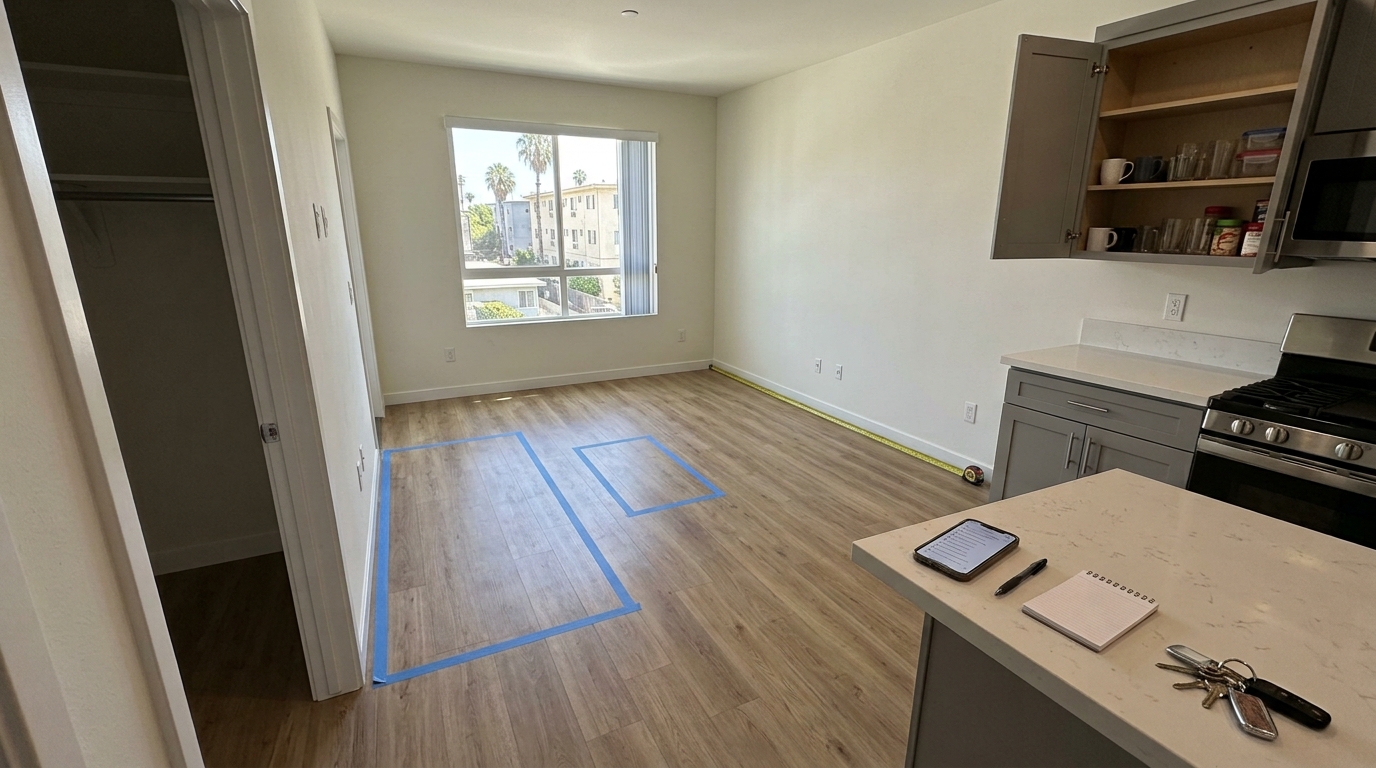
The model can look great, but it may not be the apartment you would actually get. Ask whether you are touring the available home. If not, find out what changes in the floor plan, level, windows, finishes, view, storage, outdoor space, appliances, and select-home features.
Measure the pieces that matter most, including your bed, sofa, desk, and dining table, and compare them with the usable wall space.
Skye’s inventory changes over time. You can preview the available virtual tours before a visit, then ask about the residence currently being offered.
Step 5 — Check the Practical Details During the Tour
Use the tour to see how the rental home and community would work in daily life, not just how they look in photos.
- Inside the rental home: Check storage, windows, outlets, appliance placement, HVAC controls, laundry, flooring, and any smart-home features listed for the residence.
- Furniture fit: Look at usable wall lengths, door swings, hallway width, and where larger pieces would realistically go.
- Vehicle access: Ask where residents enter, how the garage works, whether guest spaces are available, and what EV-charging rules or charges apply.
- Packages and storage: Find out how package lockers, available resident storage, or other shared services are accessed and whether additional fees apply.
- Shared amenities: Ask which spaces residents can use, their operating rules, and whether reservations or additional charges apply.
- Maintenance: Ask how regular and urgent requests are submitted and how residents receive updates.
Skye’s current amenities page lists in-home washers and dryers, smart-home technology, controlled-access parking, EV charging stations, secure automated package lockers, available resident storage rooms, a fitness center, and shared resident spaces. Amenities may vary by unit, so review Skye’s apartment and community amenities and ask which features come with the home you are considering.
Step 6 — Review Policies That Affect Your Routine
For pets, ask whether your animal is permitted, what deposits or monthly charges apply, and whether limits or restrictions exist. For vehicle needs, find out whether a space is included, what it costs, how guest access works, and whether EV charging is available.
For utilities, find out what is included, what must be placed in your name, and how shared charges are calculated. Also review the rental term, renewal process, notice requirements, and move-in date in the latest written offer.
Step 7 — Use an Apartment Comparison Scorecard
After several tours, record verified facts while they are fresh instead of relying on memory.
| Category | Apartment A | Apartment B | Apartment C |
|---|---|---|---|
| Total monthly cost | |||
| Upfront cost | |||
| Layout and furniture fit | |||
| Storage | |||
| Commute | |||
| Parking | |||
| Pet fit | |||
| Amenities | |||
| Lease terms | |||
| Move-in date | |||
| Overall fit |
Add brief notes or a simple 1–5 rating if useful, but keep the comparison simple and consistent.
Step 8 — Review Everything in Writing Before You Apply
Before submitting an application, compare the written quote with what you heard during the tour. Check the unit number, rent, mandatory fees, deposit, rental length, move-in date, vehicle charges, pet expenses, utilities, included features, concessions, application requirements, and required documents.
Ask what happens to an application, holding, or other payment if you withdraw, are not approved, or do not sign the agreement. The amount and refund policy should be clear before money changes hands.
Use Your Checklist at Skye at Warner Center
Skye at Warner Center is located at 20944 W. Vanowen St. in Canoga Park near Warner Center and showcases one- and two-bedroom floor-plan types. Once you have narrowed your preferred design, budget, vehicle, and amenity needs, contact the Skye leasing team about current availability, pricing, rental terms, fees, and move-in timing.
Frequently Asked Questions About Apartment Hunting
What Should I Look for When Apartment Hunting?
Check the full monthly total, location, floor plan, storage, vehicle needs, utilities, pet policies, amenities, rental terms, move-in date, and the specific residence being offered.
What Questions Should I Ask During an Apartment Tour?
Ask whether you are seeing the available home, what varies by unit, which utilities are included, how the garage works, how maintenance requests are handled, and which charges apply beyond rent.
Should I Apply for an Apartment Before Seeing It?
If possible, check the property, leasing contact, residence details, and latest terms before sending money or sensitive information. For remote searches, use the official website, virtual tours, and official leasing contact.
How Do I Compare Two Apartments With Similar Rent?
Compare the all-in monthly total, upfront expenses, floor-plan flow, furniture fit, commute, vehicle needs, storage, utilities, amenities, rental terms, and move-in date. A side-by-side scorecard makes the differences easier to see.
What Should I Check Before Paying an Apartment Application Fee?
Make sure the property and leasing contact are legitimate, check the residence and quoted terms, understand the application process, and ask which payments are refundable or nonrefundable. Save the written quote and payment terms.
Disclaimer
Rental pricing, fees, availability, qualification requirements, rental terms, pet policies, vehicle charges, amenities, and promotions can change. Ask the property about the specific residence and application details before paying or applying. This article provides general renter information and is not legal advice.
External source: FTC — Rental Listing Scams
The post Apartment Hunting Checklist: What to Verify Before You Apply appeared first on Skye at Warner Center Blog.
]]>The post Move-In Checklist for Los Angeles Renters appeared first on Skye at Warner Center Blog.
]]>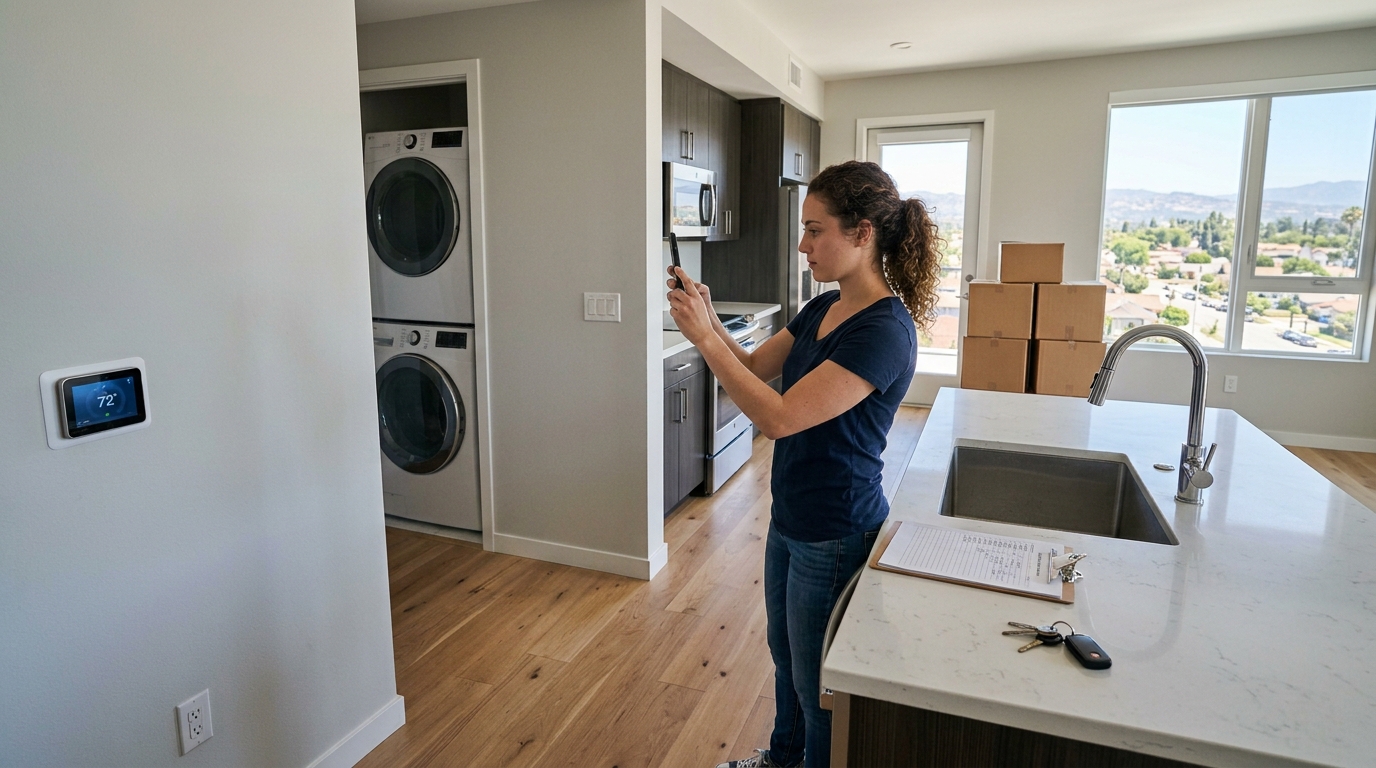
Move-in day should begin with an inspection, not with boxes covering the floors and walls. An empty apartment is easier to photograph, measure, and check for existing damage, missing items, or access problems.
This move-in checklist for Los Angeles renters covers key pickup, the walkthrough, smart-home systems, utilities, moving logistics, and first-week tasks. It is general renter education, not legal advice.
Quick Answer: What Should Be on an LA Apartment Move-In Checklist?
Before moving furniture inside, confirm the exact apartment and photograph every room. Complete the condition report and, with permission, test the doors, windows, plumbing, appliances, smoke and carbon monoxide alarms, heating and cooling, internet connections, laundry equipment, and access systems.
Then confirm parking, package delivery, utilities, insurance, keys, access codes, moving rules, and the resident portal. Keep unresolved concerns and tenancy records in writing.
Complete These Steps Before You Receive the Keys
- Confirm the exact apartment: Verify the apartment number, floor plan, lease start date, move-in date, deposit, parking assignment, pet terms, and any furnishings included.
- Ask about moving procedures: Confirm loading areas, elevator reservations, moving hours, truck access, protective pads, weekend restrictions, and the move-in contact person.
- Measure the route into the home: Check doorways, hallways, elevators, stair turns, and the walls where the bed, sofa, desk, and dining furniture will go.
Review the available floor plans and approximate dimensions before moving large furniture, but confirm measurements inside the selected residence because the public page does not currently provide complete details for every layout.
Review how quickly you can move into an LA apartment when coordinating movers and utility appointments.
When your moving date remains flexible, compare the best time to rent in LA.
You can also review the cheapest months to move in Los Angeles, while remembering that no season guarantees a lower price or easier move.
Document the Apartment Before Moving Anything Inside
Create one cloud folder for the tenancy, then use the same process in every room:
- Take wide photographs first. Photograph each room from its doorway and include the walls, ceiling, flooring, windows, and major fixtures.
- Move around the room in order. Working clockwise makes it easier to notice missed areas and connect close-ups with the wider room photographs.
- Add close-ups of existing concerns. Record scratches, chips, stains, damaged screens, loose fixtures, missing items, appliance concerns, and other visible conditions.
- Label the files clearly. Use names such as “kitchen-counter-scratch-August-2026” or “bedroom-window-mark-August-2026.”
- Complete the written condition report. Record the same issues listed in the photographs, along with the keys, remotes, parking credentials, and furnishings received.
- Send the record through a written channel. Email or upload the report, request confirmation, and save the sent message and any response.
For tenancies beginning on or after July 1, 2025, California Civil Code Section 1950.5 requires the landlord to photograph the unit immediately before or at the beginning of the tenancy. A renter should still keep a separate dated record because landlord and renter documentation serve different practical purposes.
Photographs do not guarantee a future outcome, but they create a useful condition baseline.
Inspect the Apartment Room by Room
Ask before operating appliances, testing alarms, opening secured areas, or using unfamiliar equipment.
| Area | What to Inspect or Test |
|---|---|
| Entry | Front-door lock, keyless entry, keys, fobs, intercom, and closing alignment |
| Windows and doors | Locks, screens, tracks, blinds, closet doors, visible gaps, and existing damage |
| Kitchen | Water pressure, drainage, visible leaks, appliances, cabinets, counters, outlets, lighting, and ventilation |
| Bathroom | Water pressure, hot water, toilet, drainage, caulking, ventilation, storage, outlets, flooring, and visible staining |
| Living areas | Walls, ceilings, floors, outlets, lights, vents, windows, blinds, natural light, and noise |
| Bedrooms | Bed fit, closets, doors, outlets, window direction, vents, flooring, and desk space |
| Laundry | Washer and dryer controls, door clearance, lint trap, visible hoses, and repair procedures |
| Safety devices | Smoke and carbon monoxide alarms, sprinklers where installed, emergency information, and locks |
| Outdoor and storage areas | Doors, locks, railings, drainage, lighting, flooring, storage, and included items |
Do not diagnose moisture, electrical, plumbing, or building-code concerns yourself. Photograph what you can see, report it clearly, and ask how management will evaluate and address it.
Test Smart-Home and Modern Apartment Features
- Keyless entry and access controls: Confirm the apartment lock, property entrance, elevator access, parking gate, visitor-entry system, backup-key process, and lost-fob procedure.
- Digital thermostat: Test the display and controls, ask how heating and cooling modes work, and confirm who handles filters and maintenance.
- Internet connections: Confirm providers, the in-wall panel, router location, equipment, activation time, and whether common-area Wi-Fi is separate.
- In-home laundry: Confirm the washer and dryer operate, locate the lint trap, and ask how repair requests are submitted.
- Package lockers: Register the account, test notifications, and ask about pickup deadlines and oversized deliveries.
- Parking and EV charging: Confirm the assigned space, gate credentials, registration, pricing, and availability.
- Resident portal: Make sure you can access rent payments, maintenance requests, notices, and community information.
Skye at Warner Center currently lists keyless unit access, digital thermostats, centrally wired in-wall Wi-Fi panels, broadband options from AT&T and Spectrum, in-home washers and dryers, automated package lockers, controlled parking, and EV charging. Amenities may vary by apartment, so renters should verify the exact home and current procedures.
Review the in-home and community amenities and note which systems require registration, fees, or credentials.
Confirm Utilities, Parking, Access, and Moving Logistics
Confirm who handles each service:
- Electricity
- Gas, when applicable
- Water and sewer
- Trash
- Internet and cable
- Required service packages
- Renters insurance
Inventory every access item:
- Apartment keys
- Mailbox key
- Entry fob
- Parking remote
- Storage key
- Amenity access
- Package-locker account
- Resident-portal login
Review moving-day logistics:
- Assigned parking space
- Guest parking
- Vehicle registration
- EV-charging enrollment
- Moving-truck clearance
- Loading zone
- Elevator reservation
- Street-cleaning signs
- Quiet hours
- Weekend or holiday restrictions
Utility billing differs by property, so do not assume every renter opens the same accounts.
Use the frequently asked questions about the community to confirm property-specific procedures. Skye’s current FAQ identifies one- and two-bedroom apartments, controlled parking, internet options, in-home laundry, smart-home features, furnished availability, short-term lease options, and variable move-in costs.
Finish These Tasks During Your First Week
- Submit unresolved concerns: Use the official maintenance system and include photographs when they help explain the issue.
- Save maintenance records: Keep the request number, date, response, appointment, and completion confirmation.
- Confirm access: Test the mailbox, package notifications, parking credentials, amenity entry, and resident portal.
- Register household details: Complete any required vehicle, pet, occupant, emergency-contact, or renters-insurance records.
- Organize tenancy documents: Store the lease, amendments, condition report, photographs, receipts, and management correspondence together.
- Update your address: Arrange mail forwarding and update important accounts.
Do not make electrical, plumbing, appliance, or structural repairs yourself unless the lease and property manager clearly authorize a minor task.
Renters still learning the area can review the pros and cons of living near Warner Center after the immediate move-in tasks are complete.
Keep Your Records to Help Protect the Security Deposit
Keep these documents throughout the tenancy:
- Move-in photographs
- Signed condition report
- Maintenance requests
- Repair confirmations
- Lease amendments
- Payment records
- Written communication about damage
- Move-out notice
- Forwarding-address information
- Move-out photographs
California law generally limits security to one month’s rent in addition to the first month’s rent. A limited exception may allow qualifying small landlords who meet specific ownership limits to request up to two months’ rent. The law also states that security cannot be used for preexisting conditions or ordinary wear and tear.
Near the end of a tenancy, California renters generally have the option to request an initial inspection under the procedures in Civil Code Section 1950.5. Its purpose is to identify certain proposed deductions that may be addressed before the tenant returns possession.
After the tenant vacates, the law generally requires the remaining security and an itemized statement within 21 calendar days. Current law also requires specified move-out and post-work photographs when deductions are taken for covered repairs or cleaning.
Rules can change, so consult current official guidance or a qualified professional when legal questions arise.
Start Your Move-In Planning at Skye at Warner Center
Renters considering a newer apartment community in the West Valley can use this checklist to compare Skye’s one- and two-bedroom apartments, smart-home features, in-home laundry, parking, package system, and internet options. Skye is located at 20944 W. Vanowen Street in Canoga Park, near Warner Center, and features and availability vary by residence.
Bring your measurements and questions when you schedule a tour, then confirm the exact apartment, costs, access procedures, and lease terms in writing.
Frequently Asked Questions About Moving Into an LA Apartments
What Should Be on a Move-In Checklist for Los Angeles Renters?
The checklist should cover empty-unit photographs, a written condition report, room-by-room inspection, appliances, plumbing, safety devices, smart-home systems, utilities, parking, renters insurance, keys, access codes, package registration, and written reporting of existing concerns.
When Should I Complete the Move-In Walkthrough?
Complete it after receiving lawful access but before boxes and furniture cover the floors, walls, fixtures, and appliances. Ask management when the official condition report and key handoff should occur.
How Should I Document Existing Damage?
Take wide and close-up dated photographs, list the condition on the written report, send it through an approved written channel, request confirmation, and save the full record.
Do California Landlords Have to Take Move-In Photos?
For tenancies beginning on or after July 1, 2025, California law requires the landlord to photograph the unit immediately before or at the start of the tenancy. Renters should still keep their own photographs and written condition records.
How Much Can a California Security Deposit Be?
California generally limits residential security to one month’s rent in addition to the first month. A limited exception applies to qualifying small landlords who meet specified ownership requirements. Individual circumstances should be verified.
Do California Landlords Have to Provide a Move-In Checklist?
California’s statewide security-deposit law establishes condition and photograph requirements but does not, in the source reviewed for this article, clearly require every landlord to use one standard move-in checklist form. Renters should request a condition report and create their own written and visual record.
The post Move-In Checklist for Los Angeles Renters appeared first on Skye at Warner Center Blog.
]]>The post Transportation in Warner Center CA: Easy, Connected, Car-Optional Living appeared first on Skye at Warner Center Blog.
]]>

Transportation in Warner Center CA is no longer just about getting from point A to point B. It is a daily lifestyle benefit. Warner Center has been planned as a modern “15-minute city,” where many errands, jobs, and social spots are close enough to reach without driving. For eco-friendly professionals, the big question is simple: how easy is it to live here without relying on a car?
The answer is that Warner Center offers a transit-first setup built around public transportation, electric shuttles, walking paths, and bike lanes. This guide explains how these systems work together, why they matter for renters, and how they reduce stress, costs, and environmental impact for people choosing to live here.
Key Points
- Warner Center supports car-optional living
- Public transit, shuttles, and walking work together
- Electric and zero-emission options are expanding
- Last-mile solutions reduce commute stress
- Transportation access improves daily quality of life
Why Transportation Matters When Choosing a Home in Warner Center
Transportation is one of the biggest hidden costs of daily life. Car payments, fuel, parking, insurance, and maintenance add up quickly. In Los Angeles, time spent in traffic also affects work-life balance and mental health. That is why many renters now look for neighborhoods where daily travel is easier and more flexible.
Warner Center was designed as a transit-oriented community. Homes, offices, shops, and parks are grouped closely together, which reduces the need for long drives. Walkable streets and reliable transit options allow people to plan their days more efficiently. Instead of scheduling life around traffic, residents can move between work, errands, and social plans with less effort.
This approach fits well with people who want to reduce their environmental impact. Fewer car trips mean lower emissions and less fuel use. When transportation is built into the neighborhood design, it becomes part of the overall living experience. That connection between housing and mobility is a key reason many people choose life in Warner Center when deciding where to live.
The Metro G Line: The Backbone of Warner Center Transit
The Metro G Line is the main public transit option serving Warner Center. It operates in dedicated bus-only lanes, which helps it stay reliable even during busy traffic hours. Because the buses do not share lanes with cars, travel times are more predictable than driving.
The G Line connects Warner Center to the North Hollywood transit hub. From there, riders can transfer to rail lines that reach Hollywood, Downtown Los Angeles, and other major job centers. This makes it possible to commute long distances without owning a car.
Key benefits of the Metro G Line include:
- Dedicated lanes that avoid traffic delays
- Frequent service throughout the day
- Easy connections to other bus and rail routes
- Lower cost compared to driving
For many residents, the G Line supports both work commutes and evening plans. It also makes it easier to enjoy nightlife in Warner Center without worrying about parking or driving home late.
Electric Shuttles and Last-Mile Solutions
Large transit lines work best when paired with short-distance options. In Warner Center, electric shuttles help cover those smaller trips between transit stops, offices, shops, and homes. These services reduce the need for short car rides, which are often the least efficient and most polluting.
Electric shuttles in Warner Center often follow flexible neighborhood routes. Riders can use them for quick trips to lunch, meetings, or nearby parks. Because they run on clean energy, they support the area’s zero-emission goals.
Last-mile solutions are helped by:
- Filling gaps between transit stops and destinations
- Making public transit more convenient
- Reducing short car trips
- Supporting sustainable transportation choices
These systems also connect well with outdoor and active living. Many residents combine shuttle rides with walking or biking to enjoy outdoor activities in Warner Center while still saving time.
Metro Micro: Flexible Transit for Everyday Errands
Metro Micro is an on-demand public transit service designed for short trips. Riders use an app to request a ride, and a small van picks them up nearby. Unlike ride share services, Metro Micro is part of the public transit system and is priced affordably.
This service works best for errands, off-peak travel, or trips that do not align perfectly with bus schedules. It is especially helpful for last-mile travel from major transit stops to residential buildings.
Metro Micro is useful because it:
- Offers flexible pickup and drop-off locations
- Costs less than most rideshare options
- Integrates with buses and rail
- Reduces the need to own a car
For renters comparing neighborhoods, access to services like this makes a difference. It shows how transportation options connect directly to housing in Warner Center and daily convenience.
Walking and Biking in Warner Center
Walking and biking are core parts of transportation in Warner Center CA. The neighborhood features wide sidewalks, shaded paths, and clearly marked bike lanes. These design choices make it safer and more comfortable to travel without a car.
Many daily needs can be met on foot or by bike. Grocery stores, cafés, offices, and parks are often within a short distance. This supports healthier routines and lowers transportation costs.
Walking and biking offer benefits such as:
- Reduced stress and travel time
- Improved physical health
- Lower environmental impact
- Stronger community interaction
The Warner Center Transit Hub: Connecting It All
The Warner Center Transit Hub acts as the central connection point for the neighborhood. Located along Owensmouth Avenue, it brings together multiple bus routes in one place. This reduces transfer time and simplifies travel planning.
From the hub, riders can reach destinations across the San Fernando Valley and into nearby counties. Having one central location for connections makes public transit easier to understand and use, even for people new to the area.
The hub improves transportation by:
- Centralizing major bus routes
- Reducing confusion during transfers
- Expanding regional access
- Supporting car-optional living
This setup helps residents move easily between work, home, and recreation while staying connected to the rest of Los Angeles.
Can You Really Live in Warner Center Without a Car?
- Some trips may still be easier with a car.
- Public transit covers most daily needs
- Electric shuttles and Metro Micro fill service gaps
- Walking and biking handle short trips
Living without a car in Warner Center is realistic for many people. While certain edge cases may still require a vehicle, most daily activities can be handled through transit, walking, or biking. The key is having multiple options that work together.
Comparison Table
| Factor | Car-Dependent Suburb | Transit-Oriented Warner Center |
|---|---|---|
| Monthly cost | High | Lower |
| Commute time | Unpredictable | More consistent |
| Environmental impact | High emissions | Reduced emissions |
| Daily stress | Traffic-based | Lower stress |
FAQ
How do I get around Warner Center without a car?
You can use the Metro G Line, electric shuttles, Metro Micro, walking paths, and bike lanes.
Is public transportation reliable in Warner Center?
Yes. Dedicated lanes and frequent service make transit dependable.
What is the Metro G Line?
It is a bus rapid transit line that connects Warner Center to North Hollywood and beyond.
Is Metro Micro affordable?
Yes. It is priced lower than rideshare services and accepts transit payment options.
Can I bike safely in Warner Center?
Yes. Dedicated bike lanes and wide paths support safe biking.
How walkable is Warner Center?
Many daily errands and activities are within walking distance.
Living Where Transportation Works for You
Transportation shapes how a neighborhood feels every day. In Warner Center, transit, walking, and clean-energy options work together to support a simpler routine. If you want to live in the center of this connected network and enjoy easy, car-optional travel, you may want to explore a modern apartment near Warner Center as a home base designed around modern mobility.
The post Transportation in Warner Center CA: Easy, Connected, Car-Optional Living appeared first on Skye at Warner Center Blog.
]]>