
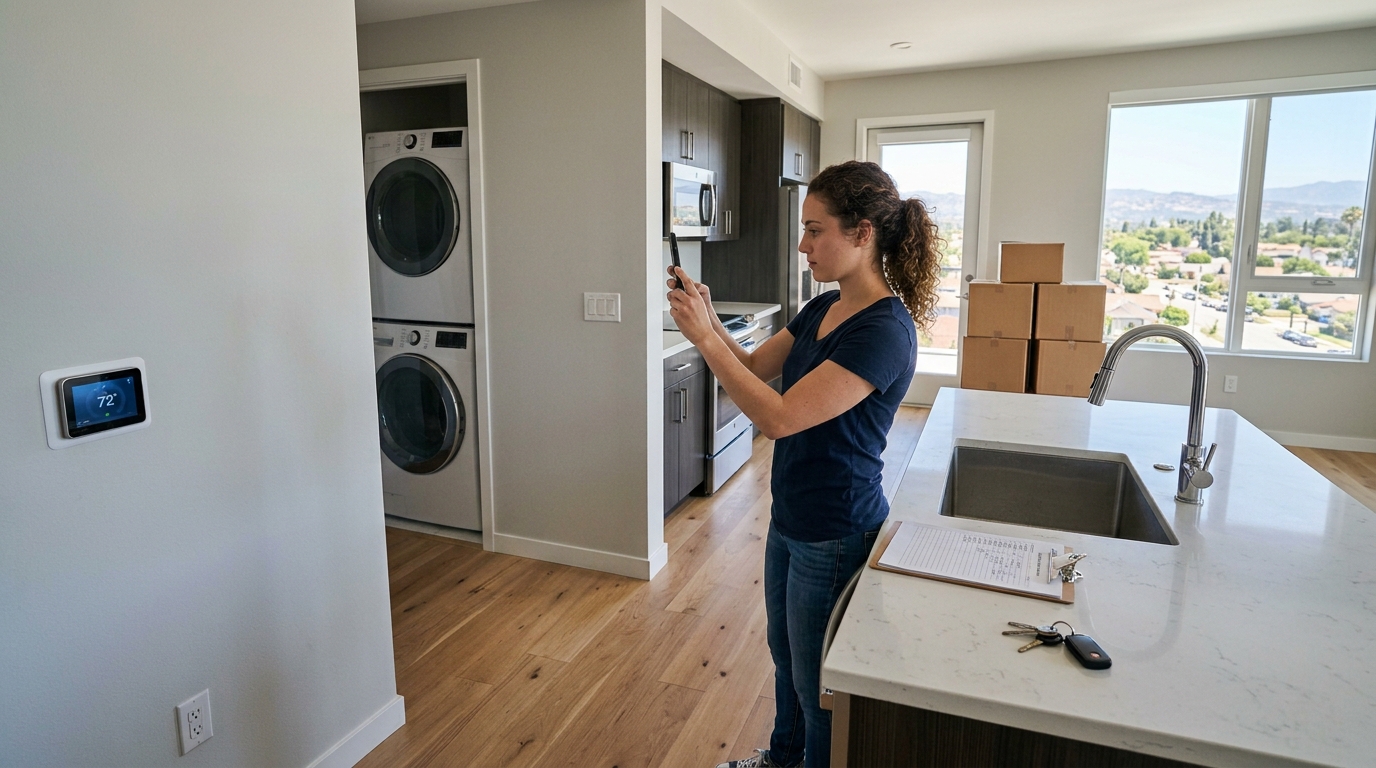
Move-in day should begin with an inspection, not with boxes covering the floors and walls. An empty apartment is easier to photograph, measure, and check for existing damage, missing items, or access problems.
This move-in checklist for Los Angeles renters covers key pickup, the walkthrough, smart-home systems, utilities, moving logistics, and first-week tasks. It is general renter education, not legal advice.
Quick Answer: What Should Be on an LA Apartment Move-In Checklist?
Before moving furniture inside, confirm the exact apartment and photograph every room. Complete the condition report and, with permission, test the doors, windows, plumbing, appliances, smoke and carbon monoxide alarms, heating and cooling, internet connections, laundry equipment, and access systems.
Then confirm parking, package delivery, utilities, insurance, keys, access codes, moving rules, and the resident portal. Keep unresolved concerns and tenancy records in writing.
Complete These Steps Before You Receive the Keys
- Confirm the exact apartment: Verify the apartment number, floor plan, lease start date, move-in date, deposit, parking assignment, pet terms, and any furnishings included.
- Ask about moving procedures: Confirm loading areas, elevator reservations, moving hours, truck access, protective pads, weekend restrictions, and the move-in contact person.
- Measure the route into the home: Check doorways, hallways, elevators, stair turns, and the walls where the bed, sofa, desk, and dining furniture will go.
Review the available floor plans and approximate dimensions before moving large furniture, but confirm measurements inside the selected residence because the public page does not currently provide complete details for every layout.
Review how quickly you can move into an LA apartment when coordinating movers and utility appointments.
When your moving date remains flexible, compare the best time to rent in LA.
You can also review the cheapest months to move in Los Angeles, while remembering that no season guarantees a lower price or easier move.
Document the Apartment Before Moving Anything Inside
Create one cloud folder for the tenancy, then use the same process in every room:
- Take wide photographs first. Photograph each room from its doorway and include the walls, ceiling, flooring, windows, and major fixtures.
- Move around the room in order. Working clockwise makes it easier to notice missed areas and connect close-ups with the wider room photographs.
- Add close-ups of existing concerns. Record scratches, chips, stains, damaged screens, loose fixtures, missing items, appliance concerns, and other visible conditions.
- Label the files clearly. Use names such as “kitchen-counter-scratch-August-2026” or “bedroom-window-mark-August-2026.”
- Complete the written condition report. Record the same issues listed in the photographs, along with the keys, remotes, parking credentials, and furnishings received.
- Send the record through a written channel. Email or upload the report, request confirmation, and save the sent message and any response.
For tenancies beginning on or after July 1, 2025, California Civil Code Section 1950.5 requires the landlord to photograph the unit immediately before or at the beginning of the tenancy. A renter should still keep a separate dated record because landlord and renter documentation serve different practical purposes.
Photographs do not guarantee a future outcome, but they create a useful condition baseline.
Inspect the Apartment Room by Room
Ask before operating appliances, testing alarms, opening secured areas, or using unfamiliar equipment.
| Area | What to Inspect or Test |
|---|---|
| Entry | Front-door lock, keyless entry, keys, fobs, intercom, and closing alignment |
| Windows and doors | Locks, screens, tracks, blinds, closet doors, visible gaps, and existing damage |
| Kitchen | Water pressure, drainage, visible leaks, appliances, cabinets, counters, outlets, lighting, and ventilation |
| Bathroom | Water pressure, hot water, toilet, drainage, caulking, ventilation, storage, outlets, flooring, and visible staining |
| Living areas | Walls, ceilings, floors, outlets, lights, vents, windows, blinds, natural light, and noise |
| Bedrooms | Bed fit, closets, doors, outlets, window direction, vents, flooring, and desk space |
| Laundry | Washer and dryer controls, door clearance, lint trap, visible hoses, and repair procedures |
| Safety devices | Smoke and carbon monoxide alarms, sprinklers where installed, emergency information, and locks |
| Outdoor and storage areas | Doors, locks, railings, drainage, lighting, flooring, storage, and included items |
Do not diagnose moisture, electrical, plumbing, or building-code concerns yourself. Photograph what you can see, report it clearly, and ask how management will evaluate and address it.
Test Smart-Home and Modern Apartment Features
- Keyless entry and access controls: Confirm the apartment lock, property entrance, elevator access, parking gate, visitor-entry system, backup-key process, and lost-fob procedure.
- Digital thermostat: Test the display and controls, ask how heating and cooling modes work, and confirm who handles filters and maintenance.
- Internet connections: Confirm providers, the in-wall panel, router location, equipment, activation time, and whether common-area Wi-Fi is separate.
- In-home laundry: Confirm the washer and dryer operate, locate the lint trap, and ask how repair requests are submitted.
- Package lockers: Register the account, test notifications, and ask about pickup deadlines and oversized deliveries.
- Parking and EV charging: Confirm the assigned space, gate credentials, registration, pricing, and availability.
- Resident portal: Make sure you can access rent payments, maintenance requests, notices, and community information.
Skye at Warner Center currently lists keyless unit access, digital thermostats, centrally wired in-wall Wi-Fi panels, broadband options from AT&T and Spectrum, in-home washers and dryers, automated package lockers, controlled parking, and EV charging. Amenities may vary by apartment, so renters should verify the exact home and current procedures.
Review the in-home and community amenities and note which systems require registration, fees, or credentials.
Confirm Utilities, Parking, Access, and Moving Logistics
Confirm who handles each service:
- Electricity
- Gas, when applicable
- Water and sewer
- Trash
- Internet and cable
- Required service packages
- Renters insurance
Inventory every access item:
- Apartment keys
- Mailbox key
- Entry fob
- Parking remote
- Storage key
- Amenity access
- Package-locker account
- Resident-portal login
Review moving-day logistics:
- Assigned parking space
- Guest parking
- Vehicle registration
- EV-charging enrollment
- Moving-truck clearance
- Loading zone
- Elevator reservation
- Street-cleaning signs
- Quiet hours
- Weekend or holiday restrictions
Utility billing differs by property, so do not assume every renter opens the same accounts.
Use the frequently asked questions about the community to confirm property-specific procedures. Skye’s current FAQ identifies one- and two-bedroom apartments, controlled parking, internet options, in-home laundry, smart-home features, furnished availability, short-term lease options, and variable move-in costs.
Finish These Tasks During Your First Week
- Submit unresolved concerns: Use the official maintenance system and include photographs when they help explain the issue.
- Save maintenance records: Keep the request number, date, response, appointment, and completion confirmation.
- Confirm access: Test the mailbox, package notifications, parking credentials, amenity entry, and resident portal.
- Register household details: Complete any required vehicle, pet, occupant, emergency-contact, or renters-insurance records.
- Organize tenancy documents: Store the lease, amendments, condition report, photographs, receipts, and management correspondence together.
- Update your address: Arrange mail forwarding and update important accounts.
Do not make electrical, plumbing, appliance, or structural repairs yourself unless the lease and property manager clearly authorize a minor task.
Renters still learning the area can review the pros and cons of living near Warner Center after the immediate move-in tasks are complete.
Keep Your Records to Help Protect the Security Deposit
Keep these documents throughout the tenancy:
- Move-in photographs
- Signed condition report
- Maintenance requests
- Repair confirmations
- Lease amendments
- Payment records
- Written communication about damage
- Move-out notice
- Forwarding-address information
- Move-out photographs
California law generally limits security to one month’s rent in addition to the first month’s rent. A limited exception may allow qualifying small landlords who meet specific ownership limits to request up to two months’ rent. The law also states that security cannot be used for preexisting conditions or ordinary wear and tear.
Near the end of a tenancy, California renters generally have the option to request an initial inspection under the procedures in Civil Code Section 1950.5. Its purpose is to identify certain proposed deductions that may be addressed before the tenant returns possession.
After the tenant vacates, the law generally requires the remaining security and an itemized statement within 21 calendar days. Current law also requires specified move-out and post-work photographs when deductions are taken for covered repairs or cleaning.
Rules can change, so consult current official guidance or a qualified professional when legal questions arise.
Start Your Move-In Planning at Skye at Warner Center
Renters considering a newer apartment community in the West Valley can use this checklist to compare Skye’s one- and two-bedroom apartments, smart-home features, in-home laundry, parking, package system, and internet options. Skye is located at 20944 W. Vanowen Street in Canoga Park, near Warner Center, and features and availability vary by residence.
Bring your measurements and questions when you schedule a tour, then confirm the exact apartment, costs, access procedures, and lease terms in writing.
Frequently Asked Questions About Moving Into an LA Apartments
What Should Be on a Move-In Checklist for Los Angeles Renters?
The checklist should cover empty-unit photographs, a written condition report, room-by-room inspection, appliances, plumbing, safety devices, smart-home systems, utilities, parking, renters insurance, keys, access codes, package registration, and written reporting of existing concerns.
When Should I Complete the Move-In Walkthrough?
Complete it after receiving lawful access but before boxes and furniture cover the floors, walls, fixtures, and appliances. Ask management when the official condition report and key handoff should occur.
How Should I Document Existing Damage?
Take wide and close-up dated photographs, list the condition on the written report, send it through an approved written channel, request confirmation, and save the full record.
Do California Landlords Have to Take Move-In Photos?
For tenancies beginning on or after July 1, 2025, California law requires the landlord to photograph the unit immediately before or at the start of the tenancy. Renters should still keep their own photographs and written condition records.
How Much Can a California Security Deposit Be?
California generally limits residential security to one month’s rent in addition to the first month. A limited exception applies to qualifying small landlords who meet specified ownership requirements. Individual circumstances should be verified.
Do California Landlords Have to Provide a Move-In Checklist?
California’s statewide security-deposit law establishes condition and photograph requirements but does not, in the source reviewed for this article, clearly require every landlord to use one standard move-in checklist form. Renters should request a condition report and create their own written and visual record.