

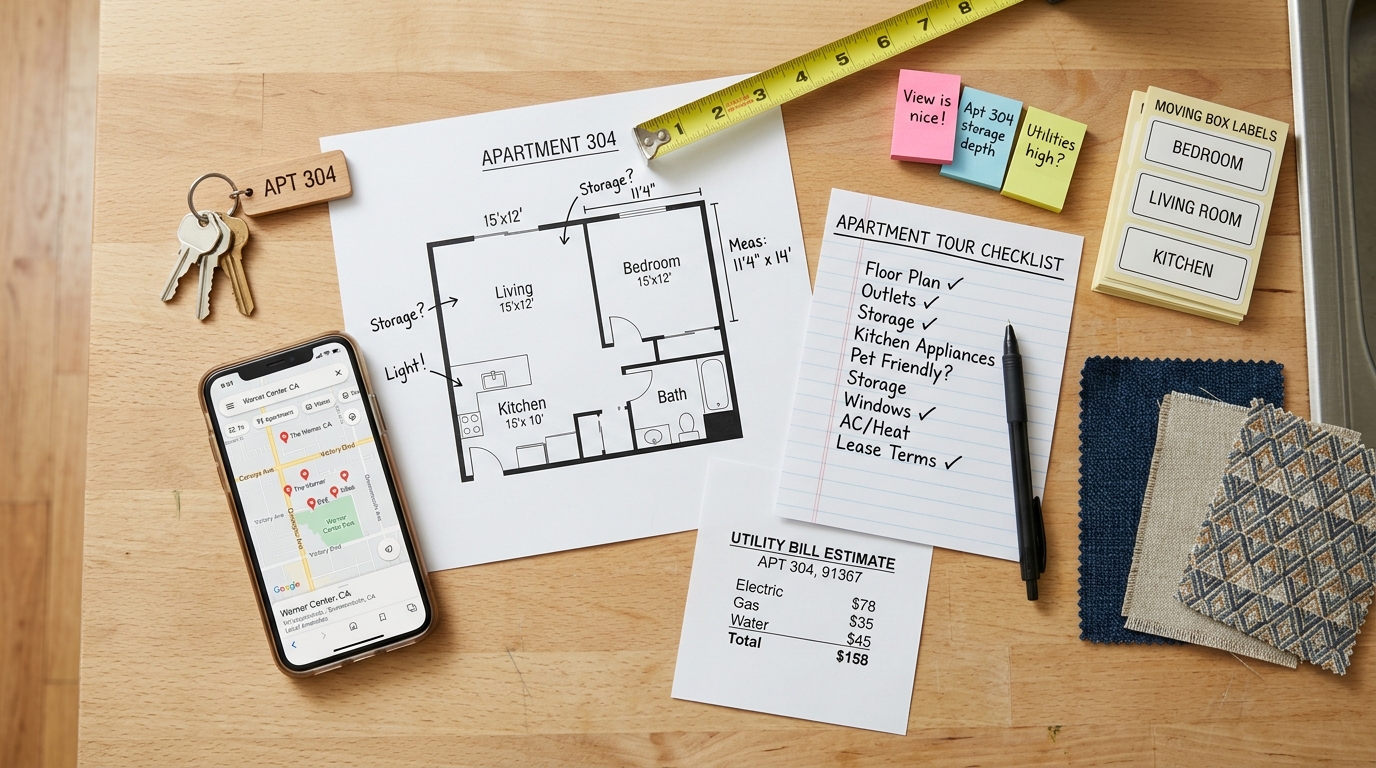
Choosing an apartment is not only about rent, photos, or a nice kitchen.
The right apartment should fit your lifestyle, budget, commute, work setup, storage needs, and daily habits. It should support the way you live now and where you want to go next.
Finding an apartment can feel overwhelming when there are many potential apartments to compare. One listing may have a better price. Another may have a better location. Another may offer amenities that look great online.
The perfect apartment is not the same for everyone.
Whether you’re moving for work, school, a fresh start, or a better daily routine, the apartment should reflect your lifestyle. If you are comparing rentals in the Warner Center area, modern apartment living near Warner Center can give you a helpful starting point for what a practical, well-designed home can look like.
Quick Answer: How Do You Choose the Right Apartment?
To choose the right apartment, start by evaluating your lifestyle, budget, commute, floor plan needs, lease terms, amenities, and surrounding neighborhood. The right fit should support your daily routine, give you enough living space, and make everyday tasks easier. Before signing a lease, compare the apartment layout, utility costs, parking, pet fees, public transportation, noise levels, and property management support so you can make an informed decision.
1. Start With Your Lifestyle and Daily Routine
The first step in choosing an apartment is understanding how you live every day.
A renter who works long hours may need a quiet place to rest. Someone working from home may need a home office or a dedicated desk area. Someone who loves hosting friends may need more living space and an open layout.
Your daily routine should guide the search.
Think about how you spend your time from morning to night. The goal is to find a home that supports your daily needs, not just a unit that looks nice in photos.
Questions to Ask About Your Lifestyle
Before apartment hunting, ask yourself:
- Do you work from home?
- Do you need a separate bedroom or home office?
- Do you cook often?
- Do you need a large closet?
- Do you love hosting friends?
- Do you need quiet space?
- Do you have pets?
- Do you rely on public transportation?
- Do you want common areas where you can relax or work?
- Do you want to be close to grocery stores, restaurants, or shopping?
These questions help you understand what matters most.
For example, if you cook often, the kitchen layout may matter more than a large bedroom. If you take frequent calls at home, a quieter layout may matter more than being close to the pool or lounge.
Choosing an apartment becomes easier when you know what you actually need.
2. Evaluate the Apartment Layout Carefully
A bigger apartment isn’t always better if the layout does not work.
The layout of your apartment affects furniture placement, storage, privacy, and how comfortable the space feels. A smart apartment layout can make a smaller home feel open and useful. A poor layout can make a larger home feel awkward.
This is why renters should evaluate the layout carefully.
Look beyond the square footage number. Think about how the space will feel once your bed, sofa, desk, dining setup, and storage items are inside.
What to Look for in a Floor Plan
When reviewing a floor plan, check:
- Bedroom placement: Is it private enough for sleep and rest?
- Living room size: Can it fit your sofa, table, and entertainment setup?
- Kitchen flow: Is there enough room to cook and move comfortably?
- Closet space: Will your clothes, shoes, and daily items fit?
- Bathroom access: Is it convenient for you and guests?
- Natural light: Does the apartment feel bright enough?
- Desk space: Is there room for a home office or work corner?
- Furniture placement: Can your current furniture fit?
- Storage: Is there enough room for cleaning supplies, luggage, or hobby items?
If you are comparing one-bedroom and two-bedroom options, think about how each layout that fits your lifestyle may change your daily routine. A two-bedroom can be useful if you need a guest room, roommate setup, or separate office.
To compare layouts more clearly, review the available floor plan options and picture how your furniture and routines would fit inside each space.
3. Set a Realistic Budget Beyond Monthly Rent
Affordability is one of the biggest factors to consider when choosing an apartment.
Rent matters, but it is only one part of the full monthly cost. A lower rent may not be the best value if the apartment has high extra costs, a difficult commute, or limited features that add stress to your routine.
The goal is to find the perfect fit for both lifestyle and budget.
Costs to Review Before Signing a Lease
Before signing a lease, review the overall cost of living, including:
- Monthly rent
- Utility costs
- Parking fees
- Pet fees
- Application fees
- Security deposit
- Renters insurance
- Internet
- Moving costs
- Potential rent increases
- Storage costs, if needed
You’ll also want to ask which costs are included and which are separate.
For example, some communities may include certain services, while others bill them separately. Parking, pets, trash, water, and internet may vary by property.
A good apartment budget should leave room for normal life. Rent should not take over every part of your paycheck. The right home should feel comfortable financially, not stressful every month.
4. Review the Lease Terms Before You Commit
Lease terms can affect your rental experience long after move-in.
A lease explains what is allowed, what is restricted, and what happens if your plans change. It should cover rent due dates, maintenance requests, guest rules, parking rules, pet policies, renewal terms, and sublet rules.
A renter should ask questions before signing, not after moving in.
Questions to Ask About the Lease
Before you commit, ask the landlord or property team:
- How long is the lease?
- Are there renewal options?
- Are rent increases possible at renewal?
- Are overnight guests allowed?
- Are pets allowed?
- Are there pet fees?
- Can you sublet?
- How are maintenance issues handled?
- Who handles repairs?
- What happens if you need to move early?
- What is included in rent?
- What is the process for submitting service requests?
These questions can help you avoid confusion later.
A clear lease can make the rental experience smoother because everyone understands the expectations. It also helps you compare potential apartments more fairly.
5. Decide Which Amenities Actually Matter
Amenities are important, but not every amenity matters to every renter.
The best amenity is the one you will actually use. A fitness center can save time if you exercise often. On-site parking can make a huge difference if you drive daily. Package lockers may matter if you order online often.
Amenities like outdoor lounges, coworking spaces, and well-maintained common areas can also improve your living experience.
Helpful Amenities to Consider
When comparing apartment communities, decide what amenities are important to you.
Helpful features may include:
- Fitness center
- Pool or outdoor lounge
- Coworking space
- Package lockers
- On-site parking
- Pet-friendly areas
- Laundry access
- Controlled access
- Common areas
- Outdoor seating
- Maintenance support
- Smart-home features
Well-lit common areas can also support daily comfort, especially when you come home in the evening or use shared spaces after work.
The goal is not to choose the building with the longest amenity list. The goal is to choose the apartment community that makes everyday life easier.
You can review amenities that support your lifestyle to compare which features may matter most for your routine.
6. Look Closely at the Surrounding Neighborhood
The surrounding neighborhood can matter just as much as the apartment itself.
A beautiful unit can become frustrating if the location does not match your life. An apartment in the wrong area for your needs can make errands, commuting, and daily routines harder.
Think about what you need nearby.
For many renters, amenities like grocery stores, restaurants, coffee shops, shopping, parks, and public transportation matter just as much as the building features.
Things to Consider Around the Apartment Community
When reviewing the neighborhood, look at:
- Nearby grocery stores
- Restaurants and coffee shops
- Public transportation
- Commute routes
- Parks or outdoor space
- Shopping
- On-site parking or street parking
- Noise levels
- Walkability
- Access to work or school
- Transportation options for car-light days
Warner Center can appeal to renters who want access to shopping, dining, transit, and everyday convenience in the San Fernando Valley. It also gives renters access to nearby Woodland Hills, Canoga Park, and larger Valley routes.
If you are still comparing nearby areas, this guide can help you compare Warner Center and Woodland Hills for renters.
Transportation is also important. Renters who do not want to drive every day should review local bus service, nearby stops, and connections. Warner Center has access to local transit options, including shuttle connections that can link riders to broader Metro service.
You can explore transportation options in Warner Center to better understand how local mobility may fit your routine.
7. Tour the Apartment With a Clear Checklist
Touring an apartment is one of the best ways to see if it feels like home.
Photos can help, but a tour shows the real light, layout, sound, storage, and condition. It can also help you notice details that are easy to miss online.
Bring a checklist so you do not forget important questions.
Expert Tips for Touring an Apartment
When touring an apartment, check:
- Closet and storage space
- Cabinet and appliance condition
- Natural light
- Window placement
- Noise levels
- Common areas
- Parking access
- Package delivery setup
- Laundry access
- Maintenance process
- Utility responsibilities
- Pet rules and pet fees
- Lease terms
- What is included in rent
You’ll find that small details can make all the difference.
For example, a closet may look fine when empty but feel too small once you move in. A street may seem quiet in the afternoon but louder at night. A parking space may be available but cost extra.
The best tour helps you make an informed decision before you apply.
To prepare for a stronger tour, review what to look for when renting near Warner Center before visiting potential apartments.
8. Choose a Place That Supports Your Next Chapter
Finding the right apartment is about more than checking boxes.
The goal is to find a home that supports your daily schedule, budget, work needs, and comfort. A new apartment should help your life feel easier, not more stressful.
The apartment that truly fits your lifestyle should align with how you live now and where you are going next.
Maybe you need a quiet space for working from home. Maybe you want a larger kitchen for cooking. Maybe you want transportation options, on-site parking, or common areas that help you feel like you’re part of a community.
Skye at Warner Center offers a living experience that can work for renters who want modern apartment living near shopping, dining, transit, and Warner Center conveniences.
To better picture the local lifestyle, you can see what living in Warner Center feels like.
When you are ready to ask questions, compare availability, or schedule a visit, connect with the leasing team for current details.
Frequently Asked Questions About Choosing the Right Apartment
What are the most important factors to consider when choosing an apartment?
The key factors include budget, location, apartment layout, lease terms, amenities, commute, parking, building access features, maintenance support, and the surrounding neighborhood. These details help you choose a place that supports your daily routine and long-term comfort.
How do I know if an apartment fits my lifestyle?
An apartment fits your lifestyle if it supports your daily routine, work needs, storage needs, commute, budget, and comfort. Consider whether you need a home office, larger closet, quiet space, on-site parking, or amenities like a fitness center.
What should I ask before signing a lease?
Ask about rent, lease terms, utility costs, pet fees, maintenance issues, parking, guest rules, renewal options, rent increases, and whether subletting is allowed. It is also smart to ask how service requests are handled.
Is it better to choose an apartment based on location or amenities?
Both matter. Location affects commute, errands, public transportation, and cost of living, while amenities can improve daily comfort. The best choice depends on which features make the biggest difference in your routine.
What should I check when touring an apartment?
Check the layout, closet space, natural light, appliance condition, noise levels, common areas, parking, building condition, and maintenance process. Also ask questions about lease terms before applying.
How can I find the perfect apartment near Warner Center?
Start by setting your budget, choosing your preferred layout, reviewing commute options, comparing amenities, and touring potential apartments. The goal is to find the perfect place that feels practical, comfortable, and aligned with your lifestyle.
Source / Accuracy Note
This guide was created to help renters choose the right apartment using renter-focused planning, lifestyle considerations, property details, and Warner Center neighborhood context. Rental prices, availability, amenities, lease terms, fees, transportation routes, parking rules, and local conditions can change, so renters should verify current details before making a decision.